The stronger the AI, the more you should practice these four instincts: Thoughts after reading "Primal Wisdom"
In the past two years, almost all the creators, students or corporate human resources directors I met asked the same question: AI is so powerful, what else do I have left?
The answer given by most people is nothing more than to quickly learn to cooperate with AI. The answer given by Angus Fletcher’s “Primitive Wisdom” is exactly the opposite. He wants you to first reopen the four instincts that have been shut down by school, namely intuition, imagination, emotion and common sense. He calls these four things together primitive intelligence, and asserts: This is exactly the ability that AI cannot learn and that you have never been taught how to use.
To be honest, when a book starts off by confronting the entire education system, I usually put a question mark first. But Fletcher’s identity made me willing to listen - he has a BA in neuroscience and a PhD in literature, taught Shakespeare at Stanford University, and the think tank he leads, Project Narrative, has also worked with the U.S. Army Special Operations Forces. This is not a message from an inspirational writer, but a counter-intuitive thing from a person using experimental data.
We spent twenty years training ourselves to be poor computers
The thing that stung me the most in the book was the story about the special forces at the beginning.
In the early 2000s, the U.S. military discovered something was wrong with its newly recruited special operators: they had high IQs and impeccable creative analysis, but the moment they entered a volatile environment, their whole world fell apart. One observer commented, quoted by Fletcher: “They know how to solve math problems, but they can’t solve life problems.”
Fletcher said he taught college for two decades and saw the same thing — young people who were strong on test-taking but weak on life experience. And his diagnosis is straightforward: the modern world has been defining wisdom in the wrong way, treating logic as all of wisdom. From the Ministry of Education to Google to the Nobel Prize in Economics, everyone is worshiping the same god.
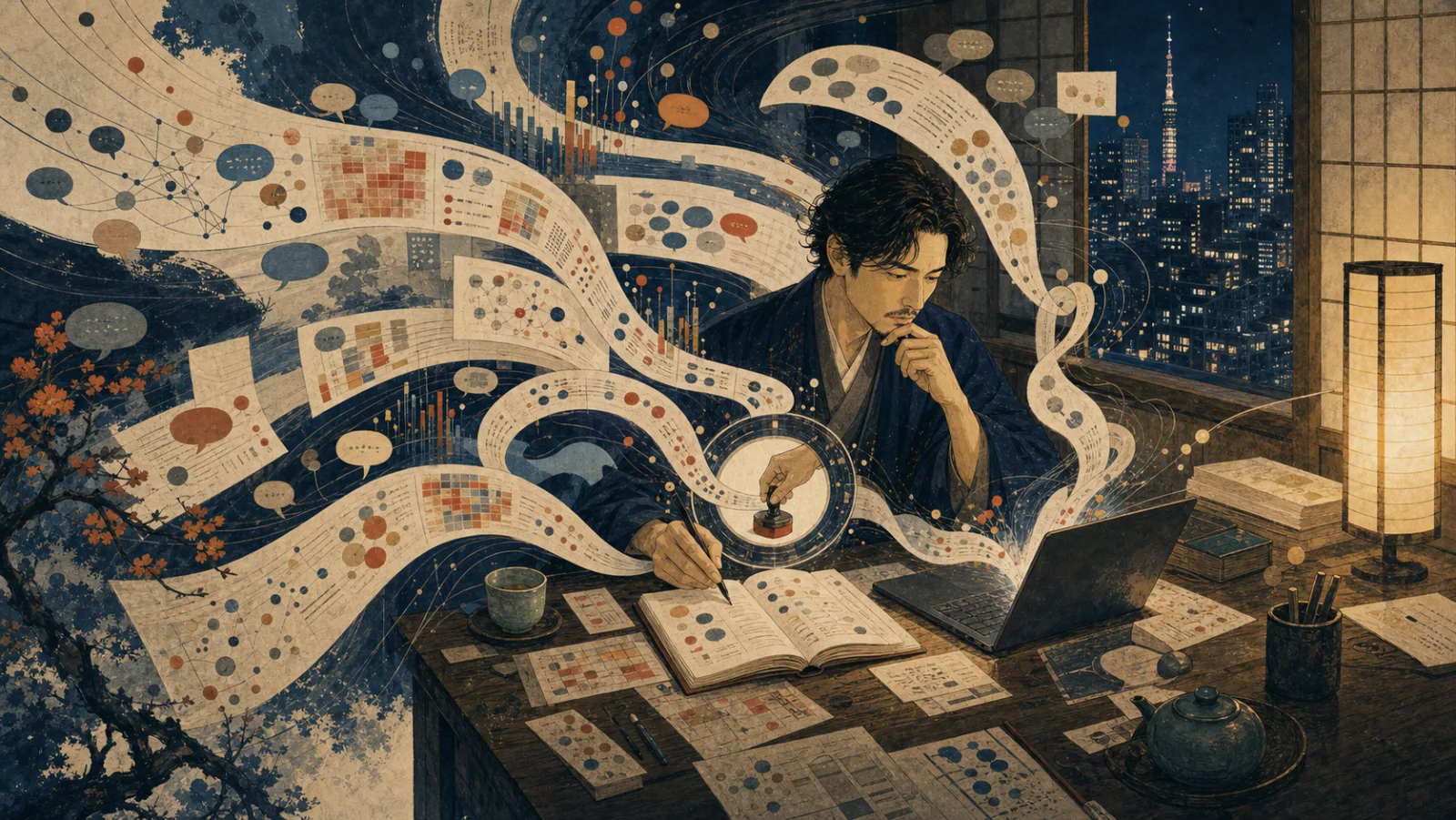
The problem is that computers are much better at logic than humans. When we devote our entire education to training students to think like computers, we are training the next generation to become inferior computing machines. I read this sentence twice. Because in the past year, I have handed over almost all standardized processes to AI, including researching information, writing first drafts, typesetting, translation and drawing. The real feeling is: whatever can be written into SOP, AI will get better and better, and what I have left in my hands are all judgments that cannot be explained clearly and cannot be written into a process.
Fletcher helped me reword this vague somatosensory feeling into a clearer sentence. This also echoes the core of what I talked about previously in “Five Things AI Can’t Do”: when AI makes execution cheaper, what is truly scarce are those abilities that it cannot replace for you.
In addition to logic, humans have four kinds of talents
What is that thing left in your hand? Fletcher breaks it down into four original talents:
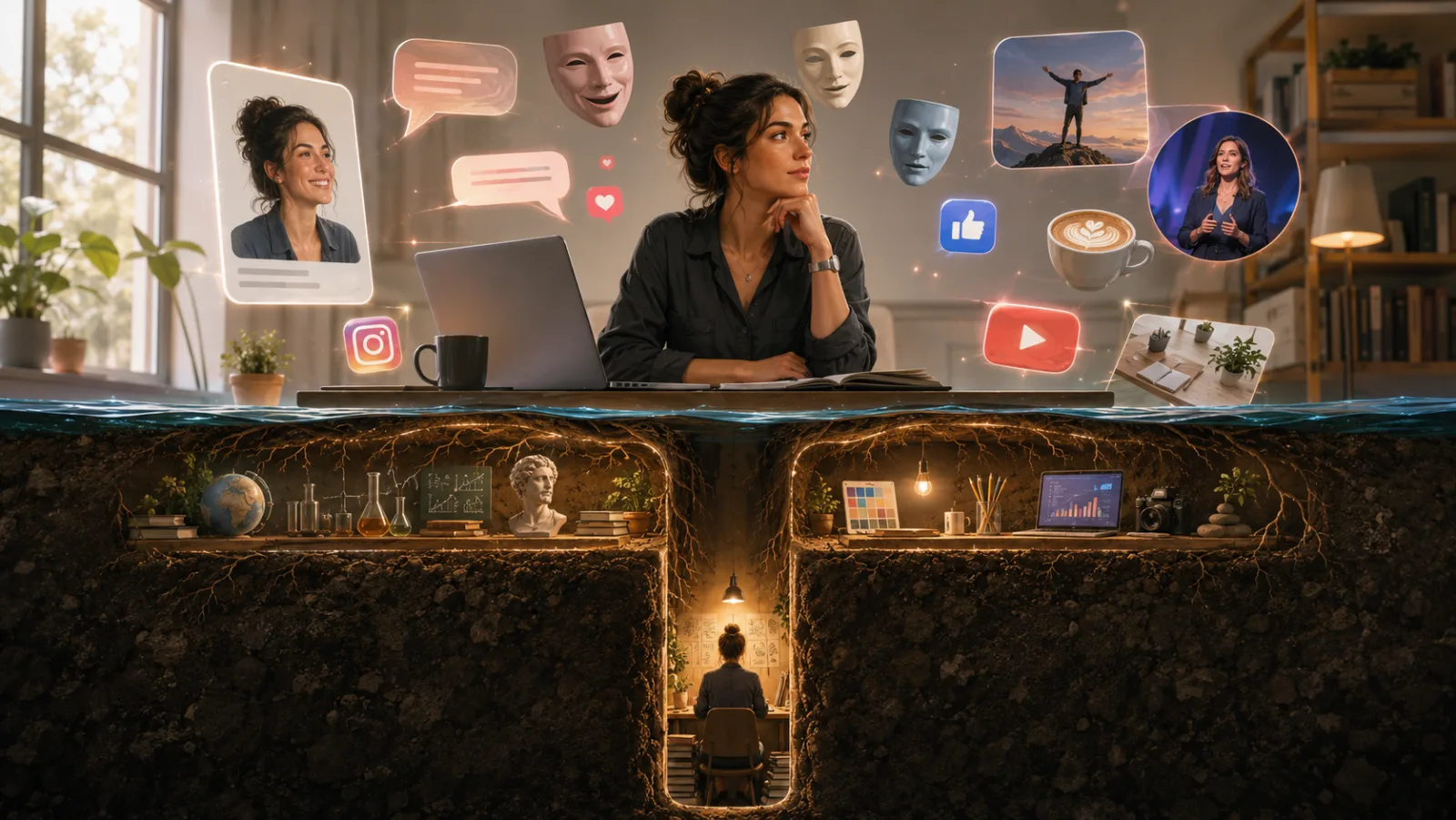
Through intuition, we gain insight into the hidden laws of the world; through imagination, we construct a future that has not yet happened; by observing emotions, we see where we should go; by using common sense, we make acceptable decisions when the information is unclear.
The examples he cited are all in the same mold: Jobs saw the iPhone from a failed mobile phone, Buffett bought it when everyone was panicking, Armstrong threw away the dashboard signal and landed by hand at the last moment of the moon landing, and Einstein turned the exception that others ignored into the starting point of the theory of relativity. What these moments have in common is that the current information is incomplete and they do not rely on data models.
Here comes what I think is the most important judgment in the whole book: the best decisions often occur when the information is the least complete.
This is the watershed between humans and AI. The essence of AI is to eat data. The more data it has, the stronger it becomes. However, in real life, it is exactly the opposite. At critical moments, there is almost always a lack of data and it cannot wait. Fletcher said the human brain has evolved over millions of years specifically to survive when information is scarce. Therefore, in situations where information is weak, people can make more flexible interpretations and actions.

🛰️ Want to see those observations and judgments before the finished product?
If you like this process of slowly turning a book or an observation into a set of judgments, that is exactly why I created Vista AI Inspiration Supply Station: every month I will share my observations, selected tools, and thinking notes that have not yet been written into formal articles with friends who are willing to get closer. For the price of a hand-cranked drink per month, we can help you develop your instincts in the AI era.
Why does AI lie seriously?
There is a question in the book that I think everyone who uses AI every day should think about it: Why does AI talk nonsense seriously, and why does this matter to you?
The answer is the same logic as before. AI is good at logical reasoning and generating random ideas, but it doesn’t have the physical intuition that something doesn’t feel right. So once the information is weak, it will not stop and say “I don’t know”, but will smoothly and confidently give you a wrong answer that sounds reasonable.
This is actually not a technical flaw, but its nature. The real value of a person is not to compare with others who can produce faster, but whether you can see it the moment it makes a mistake. This year, my usage of AI has slowly converged into one sentence: outsource logic and hard work to it, and leave judgment and taste to myself. This is consistent with my idea in “The prompt words will expire, but you won’t” - when execution becomes cheaper, your questioning and judgment are the moat.
Fletcher pushed the matter further. He believes that the real engine behind primitive wisdom is human narrative cognition: the reason why the human brain can deal with reality intelligently is because we think in the way of storytelling instead of in the way of calculation. I love this idea but have some reservations.
What I love is that it is completely in line with what I have been doing over the years. When I create content, teach writing, and make presentations, I am essentially practicing the same thing: gathering chaotic information into a story with cause and effect and trade-offs. Fletcher is basically telling me that storytelling is not a communication skill, but the operating system of human intelligence. This is why today, when AI-sensing articles are flying everywhere, I have always believed that “You are not not writing well enough, but you are too easily replaced”. What is truly irreplaceable is your unique narrative.
What remains is that the idea that narrative cognition can explain everything is a bit too beautiful and too smooth. It is close to the kind of criticism of AI in his book that sounds reasonable. How to train the four talents separately and how to verify the effects after training? The first ten chapters are practical, and the third part only adds science. So I would advise you to read it with a grain of salt: think of it as a set of hypotheses worth testing, rather than a foregone conclusion. Reading it this way is more in line with its own spirit.
After reading this, what do I plan to do?
If a book can only make me nod my head after reading it, then it is only worth a cup of coffee. This book made me want to take action. I distilled it into three actions you can take immediately, and I am sharing them with you:
First, deliberately leave blank space for intuition. When encountering important judgments, don’t rush to give the AI student an analysis. Ask yourself “What is my first instinct?” Write it down, and then look it up. By comparing them afterwards, you will gradually know which topics your intuition was accurate and which ones were inaccurate. This is worth more than blind faith in any party.
Second, treat AI as logic and leave yourself to exceptions. Let the AI take care of the routine, and you’ll keep an eye on the place where all the data is correct, but you just think there’s something strange about it. The book is a good reminder: Some people still make wrong decisions even though the data is all correct. Your job is to be the one who sees the exception.
Third, practice telling a story every day. You don’t have to write a long article, just one paragraph: what happened today, why, and then. This is the core exercise in Fletcher’s entire book, and it is also the trick that I think has the lowest threshold and the highest compound interest.
Fletcher has a saying that goes something like this: The stronger the AI, the less reliable the advantages you have accumulated in the past. I turned it into my own version - when the machine takes over the standard answers, your real competitiveness is those instincts that are not taught in textbooks and cannot be written into SOPs. This book does not promise to help you practice it, but at least it allows you to re-see that you already have these instincts.
For anyone who is competing for jobs with AI, or wants to do things with AI, this is a good book worth reading slowly, and I am happy to recommend it to you. If you also like this kind of experience that connects new books with the workplace, my review of “One-person Company Management in the AI Era” I wrote before is just another piece of the puzzle on the same road.
After reading, if you also want to implement this division of labor into your daily life, hand over standardizable output to AI, and leave judgment, taste, and narrative to yourself, welcome to solo.tw to take a look at my courses: If you want to string together topic selection, information gathering, and first draft writing into your own content production line, you can check out AI Content Production System Workshop〉; If you want to make the tool itself and let AI become your development partner, you can watch 〈Vibe Coding Practical Workshop〉. There is no conflict between practicing instinct and using AI on the edge of the knife.