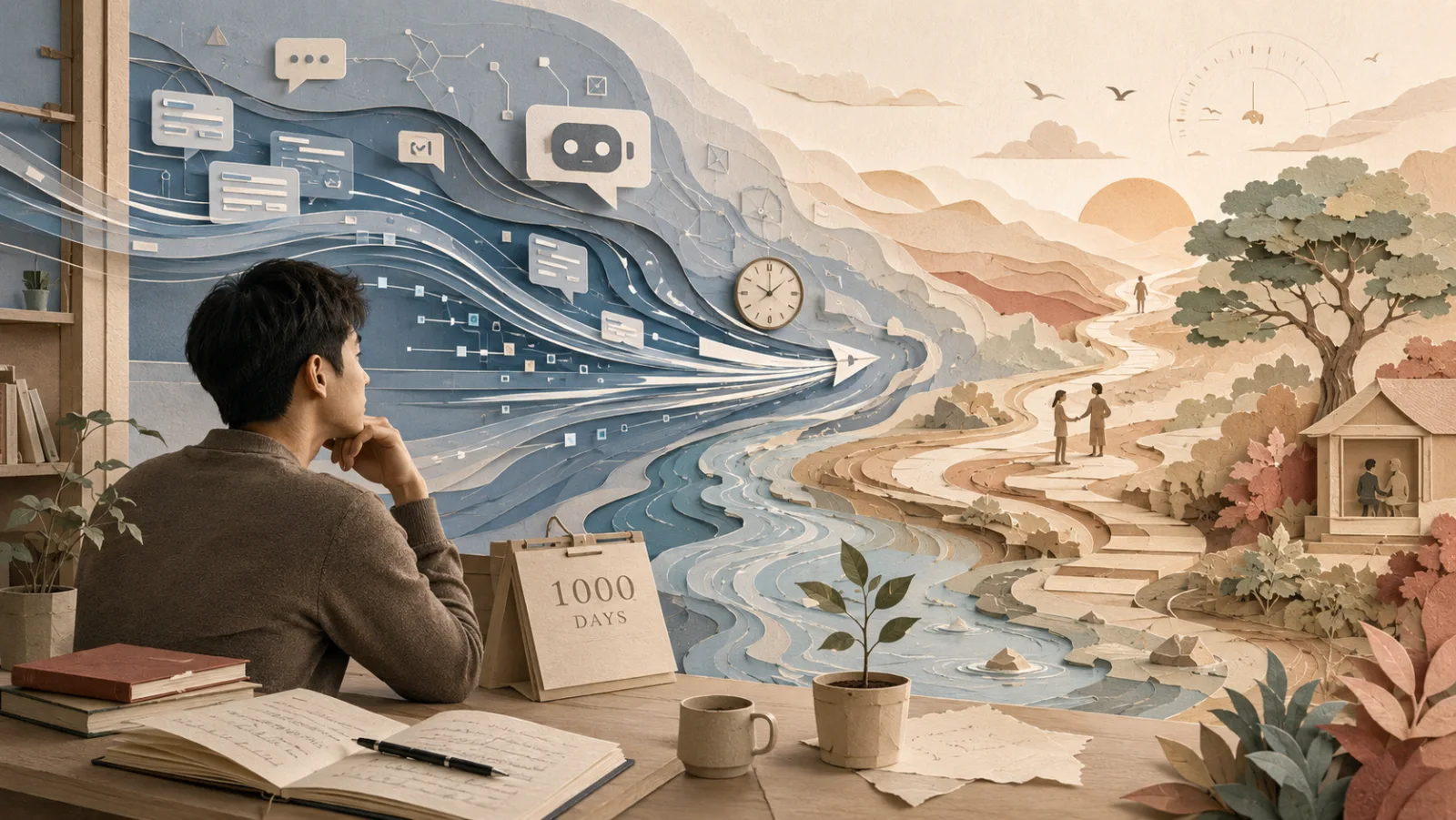
When AI begins to take on the role of companionship: 1,000 days later, I’m even more afraid that we will become less and less accustomed to facing someone who doesn’t fully cooperate with us.
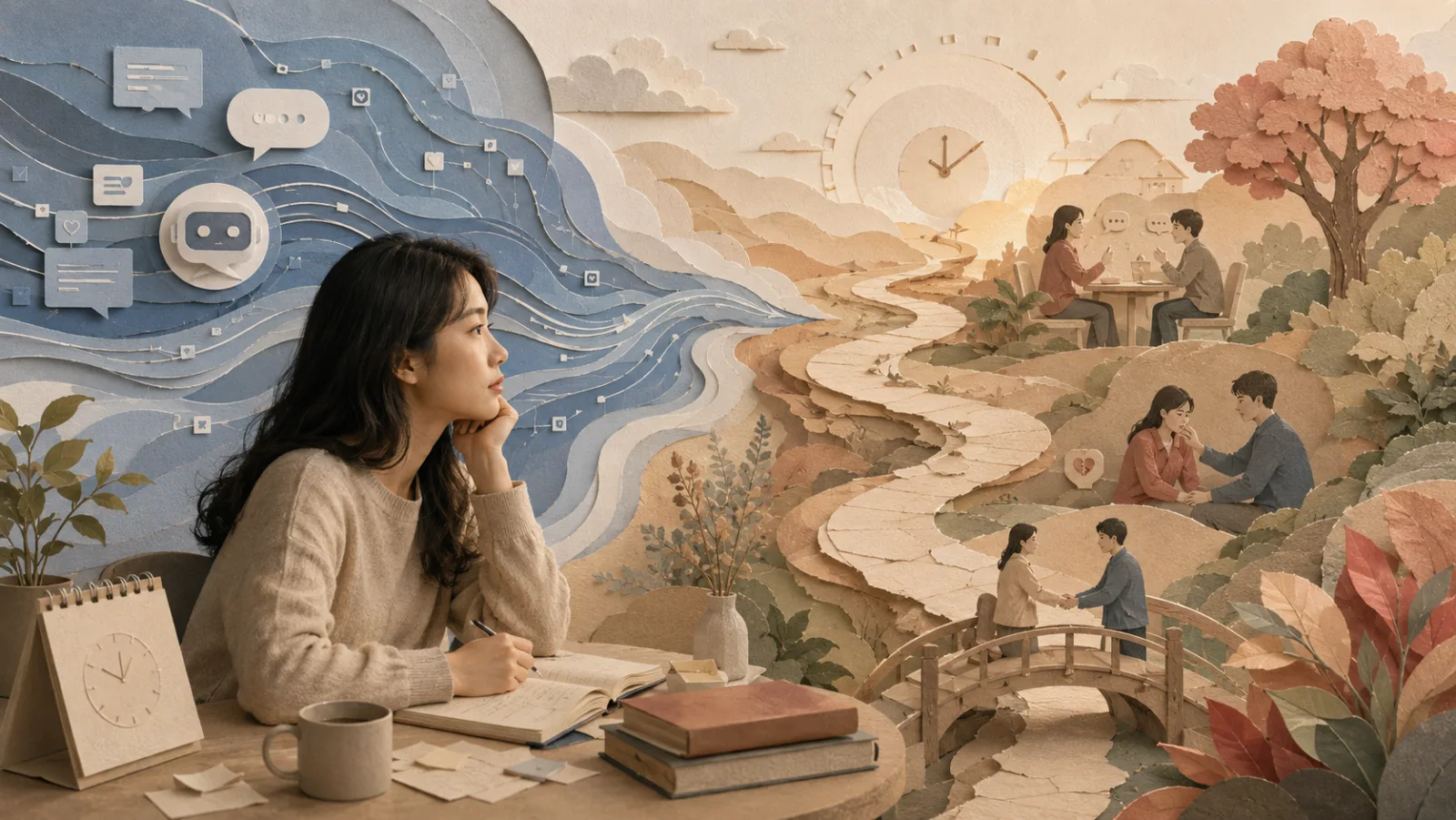
Recently I was watching “The Next 1000 Days (opens in a new tab)”. This book raises a very direct question: How much of the capabilities you are working hard to accumulate now will become ineffective in the AI era?
Originally, I thought that this book would make me think more about work, career, or what abilities will not be easily replaced by AI in the future. But as I watched, I thought of something else.
More and more friends started chatting with AI
Recently, I have noticed that more and more friends around me are starting to chat with AI.
Actually, me too. Not only do I often chat with AI, but I also discuss major work and life matters with my virtual secretary every day. Maybe, being alone, I am afraid of loneliness, right? After all, The Weight of Loneliness, sometimes it’s not about whether there is someone around you, but whether you can find a place to say those words properly.
It’s not because I don’t have friends. Sometimes I just have some words that I don’t know who to say; some emotions that I don’t want to be a burden to others; some thoughts that are still confusing, I just want to find a place to express them first. AI just provides a very convenient exit.
And, I don’t mean to criticize this, after all, I myself talk very diligently with AI (laughs). Sometimes, it can indeed help us sort out our emotions, clarify our thoughts, and even catch a person when he doesn’t know what to do.
This is also what I find interesting.
In the past, we have always believed that the things that are least likely to be replaced by AI in the future should be understanding, emotion, and companionship. This is also the area that many people always come back to when talking about things that AI cannot do. But now, AI has begun to take on a part in accompanying this matter.
Such companionship is convenient, stable, and unburdened
It won’t get angry because you’re too busy, won’t complain about why you didn’t come back until now, and doesn’t need to spend time maintaining the relationship. You can show up at any time and leave at any time. When you want to come back, it will still be there.
This kind of companionship is convenient, stable, and not burdensome.
However, as someone who has been engaged in service and communication for a long time, and has been observing how to build trust between people, I can’t help but start to think: As we become more and more accustomed to such interactions, will it gradually change the way we get along with real people?
Because real interpersonal relationships are not so convenient
Friends may not be able to respond immediately when you need them; your partner may misunderstand what you mean; colleagues may also have their own emotions and positions.
We need to wait, we need to understand, and we need to consider the other person’s feelings. Sometimes you will say the wrong thing, be disappointed, argue, and then work hard to repair the relationship.
These processes are cumbersome. But if you think about it carefully, it seems that the trust between people is accumulated bit by bit in these troubles. I have always believed that the real value is not in what you post, but in the relationships you create, and relationships are never bought by convenience.
So the reminder that “The Next 1000 Days” brings to me is not just about which jobs may disappear, or what capabilities we still need to develop. What I care more about is: as AI understands us better and better and satisfies us, will we become less and less accustomed to facing someone who does not fully cooperate with us?
AI can help us sort out our emotions, but it cannot replace us in practicing relationships.
I don’t think we should reject the company of AI. Sometimes, it can actually be a good outlet.
But maybe we need to remind ourselves: AI can help us sort out our emotions, but it can’t replace us in practicing relationship management. Because true companionship, in addition to catching, also includes response, understanding, running-in and repair. Sometimes, being with someone isn’t just about saying the right thing, it’s about being willing to stay there even when it’s inconvenient, imperfect, or even when you don’t know what to say.
As I read this book, I felt more and more that the real challenge posed by AI may never be just whether it will replace people. It’s also changing our habits, our patience, and our expectations of relationships.
Because of this, I hope to put AI back to its rightful place: let it share the chores that can be automated for us, and leave the saved time and effort to the people who really matter. If you also want to learn to make good use of AI in this way, I have put this set of ideas into a workshop.
In 1,000 days, we may all be better at using AI. But I hope that we at that time did not become less understanding of people because of this.
Regarding what kind of people we will become in 1000 days, I also wrote an article from another perspective: “After 1000 days, I care more about what kind of people we will become”, which talks about the patience and judgment of AI quietly changing. If you like this article, that article may also be suitable for you. I also recommend you to read this book “The Next 1000 Days (opens in a new tab)” which made me think a lot.
Next step
Bring this topic to your team
Vista Cheng speaks and runs workshops on AI workflows, writing and content systems for companies, schools and public agencies.