The prompt words will expire, but you won’t: After AI makes execution cheaper, what’s really valuable is the power of questioning and your voice
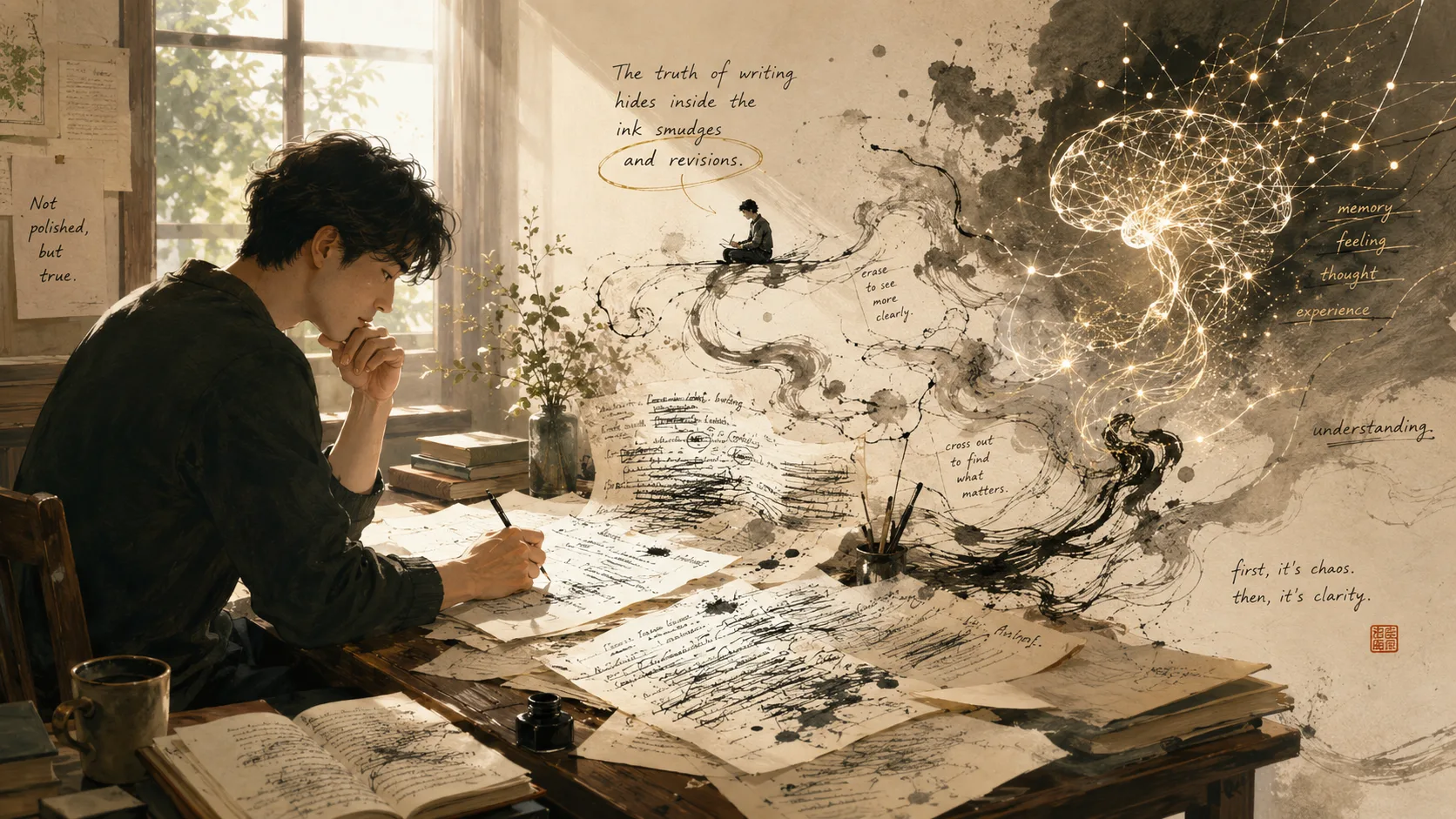
*▲ When AI makes execution cheaper, the truly scarce capabilities will move upstream: questions, taste, and your voice. *
In the past two years, one of the most frequently asked questions I have received in internal corporate training or public classes is: “How should I write the prompt words accurately?”
Well, I can understand the anxiety. But more and more, I want to tell students that this is not the point.
The people who should care most about the prompt words are telling us the opposite answer. Tibo Sottiaux, who is responsible for ChatGPT and Codex at OpenAI, said something in a recent interview that made me keep rewinding the video and listening to it again: The benefits you get today are directly proportional to your prompting ability; but they will not be in the future. He described the AI of the future as being like a good tailor, able to understand you at a glance and know what suits you. You don’t have to give the instructions very nicely, the dividends will come to you on their own.
If what he says is true, then the set of reminder words (or mantras you call them) that you are currently practicing has a shorter shelf life than you think. I am in The command economy is coming! AI is rewriting the rules of the business game in the next ten years I talked about this trend line, and this interview seems to push it a step further.
But that’s not bad news. When the two layers of bonuses of execution and prompting are wiped out by technology, some abilities will in turn become more scarce. They all have one thing in common: they all refer back to you and cannot be outsourced to any model. I boil it down to three things: the power of questioning, taste and your unique voice.
Questioning power: The bottleneck has been moved from the command tool to asking the right questions.
Let’s talk about questioning first, because it’s the most counter-intuitive.
Prompt words are a kind of tool operation, and the essence is learning how to command the machine. But questioning power is not. It is judgment, knowing which question is worth asking among a bunch of possibilities. When AI is so powerful that it does not require you to give precise commands, the difference no longer comes from whether you can operate it, but from what questions you approach it with. This is what I have always emphasized: instead of asking what can AI do for you, think clearly about what you want it to do for you.
To be honest, I saw this clearly in class. The same set of tools and the same model were given to thirty students, and the results after half a day were vastly different. What widens the gap is never whose prompt words are arranged more neatly, but who asks a question that really gets stuck on them? In other words, for those who know how to ask, AI becomes their advisor; for those who don’t know how to ask, AI only helps them make mediocre things faster.
Furthermore, the reason why the power of questioning is difficult to replace is that it cannot be quickly achieved by watching others. No matter how many good questions you read from others, it will not automatically improve your questioning skills. It only grows when you actually do something, hit a wall, or ask a question in your mind. This is physical work, not intellectual work. Regarding this point, I also wrote an article “How to ask the right questions and seek help from others”, which you can read in conjunction.
Taste and Sound: Once you take away the face, what’s left?
The second thing is taste and the third thing is your unique voice. I put them together because they are two sides of the same thing.
Content creator Dan Koe gave me the most brutal test I’ve ever seen. He said, take your face out of the content, if anyone, not even ChatGPT, can write this, then you don’t have a voice of your own.
Well, this sentence deserves to be posted on the desk of everyone who makes content. I believe that when you open any platform now, you will have the same experience: everyone’s tone and wording are becoming more and more similar, until you get tired of it after swiping twice. When generated content becomes free, sameness becomes the default. What can make you recognized is not the speed of your output, but the things in your output that others cannot copy.
Dan Koe puts the formula simple: good ideas times a unique voice. The so-called voice is a fingerprint synthesized by your point of view, your audience, the tone of your words, plus the books, people, and experiences that have influenced you.
Well, it’s the same thing as taste. Taste is judgment, shaped by consequences, of what is worth doing, and sound determines who it sounds like. Neither of them can be obtained by buying a class and finishing a round of content. They can only grow out time after time if you really publish and make valuable bets. I have been writing e-newsletters for the past few years, and none of the most recognizable sentences were found through data searches. They are all judgments left after being repaired by reality. This is what I said before: When AI can write faster than you, taste is your last moat.

🛰️ Want someone to accompany you to see clearly in the wave of AI changes?
Almost all the public articles you see are finished products after repeated polishing. But what I cherish the most is the warm judgment before the finished product - this is the reason why I created Vista AI Inspiration Supply Station: a weekly thought note for fellow travelers in the AI era, sharing those Yoshimitsu Kataha that will not appear in formal articles with you who are willing to get closer.
So where should AI be placed?
When I talk about this, people usually ask me: But AI is getting better and better at asking questions, imitating styles, and can even copy sounds, so what do people have left?
This is where it becomes clear. Imitating the tone does not mean synthesizing the world view. AI can learn your usual sentence patterns, but it doesn’t have the walls you’ve hit, the decisions you’ve made, or the consequences you’ve endured.
Dan Koe puts it very bluntly: He will never let AI write the final newsletter or script for him, because even if the tone is right, it still doesn’t click. He loves the craft of writing. When Tibo talks about programming, he sticks to the same line: when you produce a piece of program code, you are responsible for it. If it breaks, it is not the fault of the AI, but your fault. Understand that this matter cannot be outsourced.
This is exactly the same as my own habits. I use Claude Code as a tool and AI to handle a bunch of drafts and chores, but the last draft of the weekly newsletter must have been reviewed by myself. It’s not because AI can’t write it, it’s because once I let it decide what to say for me, I hand over my only differentiation with my own hands. The role that AI should play is a thinking partner, not a ghostwriter: it is responsible for accelerating and stimulating, and you are responsible for retaining opinions. Once this division of labor is reversed, you are just a button.
How to practice these three things?
Now that I’ve finished talking about my points, I’ll give you four practices that you can do this week.
One is to create your own unique voice file, and use examples instead of descriptions; alternatively, you can also directly use the free tool I developed 〈AI Personality Generator〉. Many people want to explain to the AI what their tone is like first, but the effect is usually very poor. A more accurate approach is to give it five old writings that are most like you: emails, posts, and even messages you wrote to friends, and let it extract you from what you actually wrote, rather than listening to you introduce yourself.
The second is to rewrite the prompts to the AI into questions to friends. Next time you want to ask AI for help, don’t rush to give instructions. Instead, talk about where you are really stuck as if you were chatting with a knowledgeable friend. You will find that whether the questions are asked well or not has a much greater impact than whether the prompts are not neatly written.
The third is to use the three steps of research, reverse engineering and originality, but keep the third step well. Find content that has been proven to be effective and break down why it is successful. This is not plagiarism, because most readers never want new and original content, but something effective plus your point of view. But the last step, making it your own, must be injected with your voice, otherwise you will just make a beautiful copy.
Fourth, keep the final product to yourself. AI can be heavily involved in every previous step, but the draft before publishing must be written by yourself. This is not a question of efficiency, but of dominance.
The point is, the better the AI, the higher the reward for these four things. When execution becomes free, scarcity moves upstream, to where questions, tastes and sounds point back to you. Instead of memorizing another set of reminder words that will expire, it’s better to invest your time here.
Please remember that the prompt words may expire and become invalid, but you will not.