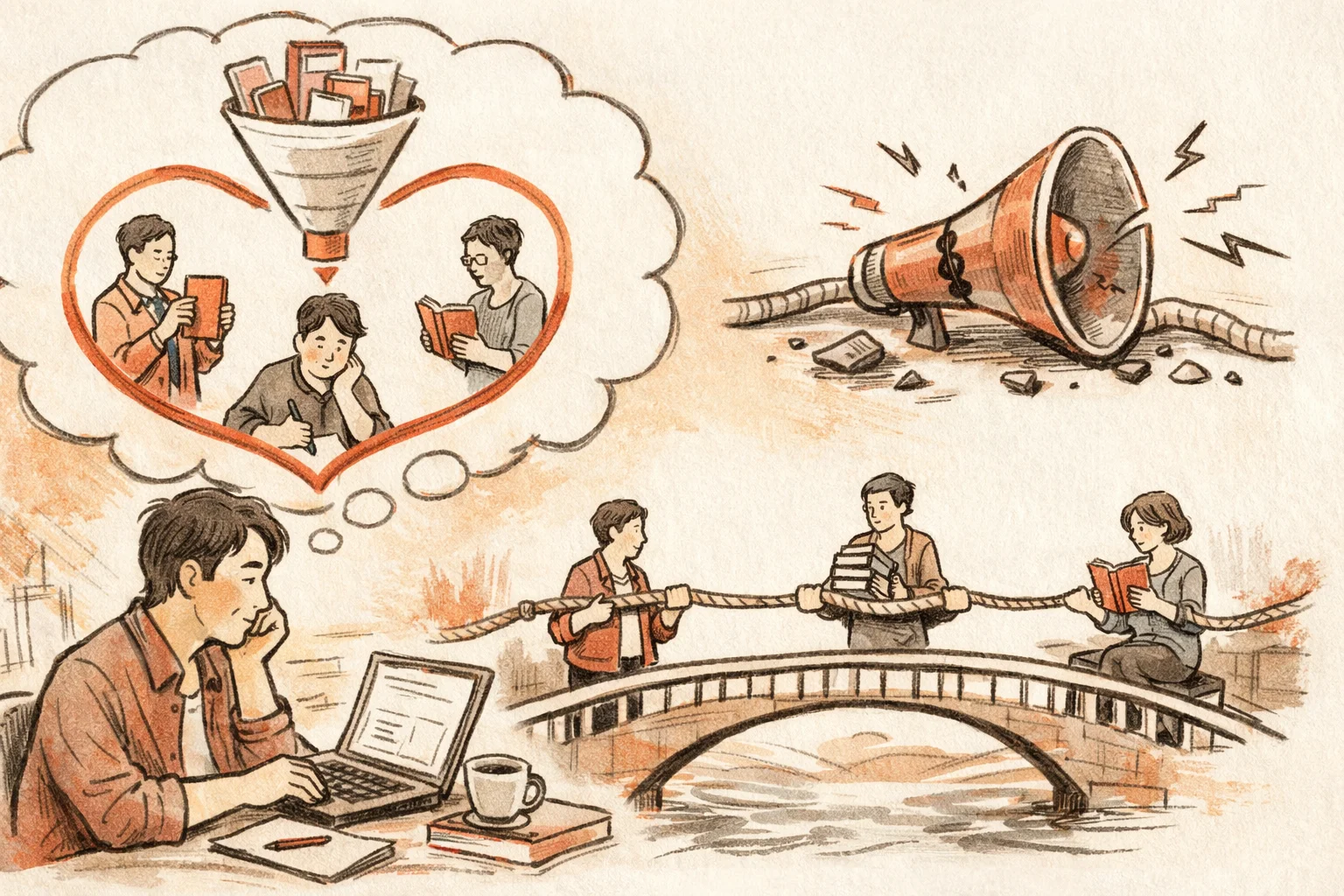
The hardest thing to sell in 2026 is not the product, but "you"
Sometimes I think that Taiwanese creators are actually very cute, but they are also very hardworking.
The lovely thing is that everyone is willing to share and put their experiences of stumbling and groping along the way into a live broadcast, a post or a free lecture. The hard part is this: you have obviously put a lot of effort into it, but the audience often just stands at the door, with their hands in their pockets, and their twinkling eyes seem to say: “Let me take a look first, don’t sell to me.”
Well, it’s not your fault, nor is it their fault. To be honest, this is just a reflection of current Internet culture.
We have all been scammed. No matter how you open Threads or Facebook groups, there will always be people complaining: the courses they bought were useless, they were brainwashed after joining the group, they only found out after signing up that they had to purchase more, and they only became more anxious after following it for a long time. Therefore, when a stranger sees you for the first time, he does not look at your major first, but activates his defense mechanism first: Are you coming to cut my leeks?
That’s why I say that the hardest thing to sell in 2026 is not the product, but “you”.
You have many majors, so what you want to sell is a course, a consulting plan or a membership; but the real question in the other person’s mind is: “Why should I trust you?” Before this question is properly answered, no matter how much you talk about it, it will be like talking to a half-open door. There was someone behind the door, but he didn’t open the door!
And once you understand this, you will suddenly understand another phenomenon: why live broadcasts now become more and more like a war of attrition. You have prepared the briefing, designed the process, and even memorized the speech until you know it by heart, but the number of people online is still falling like a slide in the first five minutes. You think it’s because you’re not exciting enough, but it’s not. Many times, a LINE notification pops up on his phone; or he happens to see another teacher also broadcasting; or YouTube promotes a short video that he wants to watch more. The competition between you and him is never your peers, but the whole world.
This is the era of lack of attention: it’s not that you don’t work hard, it’s that the world is too busy.
Therefore, what a creator has to do in 2026 is no longer to tell the content more completely and make the briefing more beautiful, but to try to minimize the cost of distraction. You want the other person to know as soon as they come in: The problem you want to solve today is exactly the point that hurts him the most at the moment. It’s not that I’m here to share my experience, nor that I’m here to talk about trends, but more directly – “I understand where you are stuck, and I can help you get through it.”
The current market is particularly susceptible to this, because we generally have fragmented time: commuting on the MRT, taking a lunch break in the corner of a convenience store, and scrolling on our mobile phones while accompanying our children at night. If you give him a big and empty theme, he won’t have the patience to wait for you to lay it out; if you give him an incision small enough to hit the ground immediately, he will be willing to stay.
Staying is just the first step
But staying is only the first step. The real question is: Why don’t those who stay buy it?
Here you will encounter the second wall in 2026 - the harder you sell, the more everyone wants to escape. Not because he doesn’t need it, but because he hates being pitched. Once someone notices that you are using words or tricks, they would rather not buy it than lose face.
Therefore, I have always felt that the most powerful sales method is not hiding, but being transparent.
If you want to sell, just say it up front: I will explain the concepts you need most in this content, but in the end I will introduce a more complete plan; if you don’t want to hear it, you can leave first, but if you want to get results faster, stay. If you respect his choice, he will respect you. If you are secretive, he will treat you as just another internet chatter.
Transparency may seem simple, but it is the shortcut to trust. Because trust is not about yourself saying “I am sincere”, trust is when you dare to let the other person leave freely.
What exactly are you selling?
Next, there is a core that many people really ignore: In the era of explosion of AI and free knowledge, what exactly are you selling?
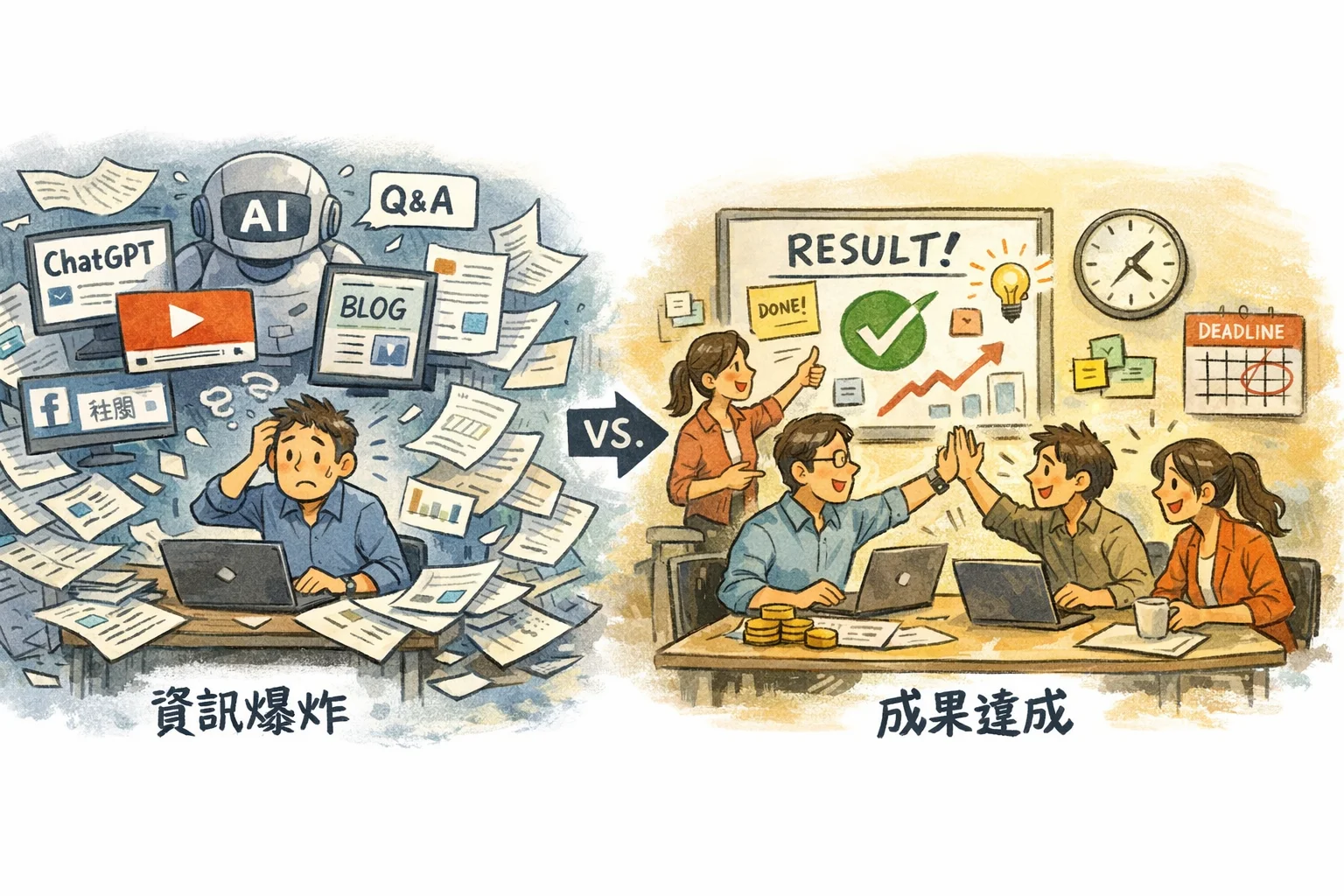
I must put it more bluntly: If you are still selling information, it will inevitably become harder and harder. Because information is everywhere, AI can also speak clearly and logically. If what you sell is “I compiled XX methods” or “I will tell you XX steps”, then the audience will silently think: Then why don’t I just ask AI?
There’s only one thing that sells in 2026: results.
To be more precise, it is the ability to accompany you from zero to result. Can you take a person through the most painful distance - from knowing to doing it, from wanting to actually doing it, from a bunch of concepts to a usable result? That distance is the reason to pay.
I often compare the internal training of Taiwanese companies. When you go to a company to take a class, your supervisor will never just ask you “How complete did you speak?” He is more concerned about: after finishing speaking, can colleagues apply it immediately? Can the efficiency be faster next week? Can we see results next month? This is a results-oriented reality. The same logic applies when you sell courses, consultants or memberships online.
Therefore, you will see a very interesting phenomenon: in the past, consumers often asked about the course hours, but now they more often ask “How long will it take me to make it?” Because it’s not that we don’t like learning, but we don’t want to be kidnapped by learning anymore. If learning doesn’t bring about change, it’s just an anesthesia for anxiety.
And when you position yourself as someone who leads people to produce results, your entire content strategy will be rewritten. You no longer need to use long speeches to prove how much you know. What you have to do is lower the threshold for the other party to implement. You can give him a template, give him an SOP, give him a checklist, or even turn your know-how into a tool or process that can be used directly, so that he does not need to watch a bunch of videos before starting to act, but can produce something today after listening to it today.
It’s like I didn’t just make a 60-page pre-class study manual for Saturday’s Vibe Coding Practical Workshop, but made 12 materials in one go. I directly organized my learning and exploration during this period into a process that can be used repeatedly.
This ability to make people faster is the truly valuable profession in 2026.
The transaction path has become longer
However, even if you can lead people to achieve results, the transaction is still not as fast as before. This is the third wall, and it is also where many creators make misjudgments: they think they have done something wrong, but in fact they are just living in a new world where the transaction path is longer.
In the past, when everyone saw an advertisement or listened to a live broadcast, they might swipe their card immediately - this kind of plot still exists, but the proportion is declining. People nowadays are more like taking a circuitous route: they first see your sales page and go back to check your details; they see you again the next day and start to observe you; after a while they join your LINE or e-newsletter and become familiar with it; until one time they really need it, they suddenly place an order.
To be honest, I have seen too many similar cases. Some people have been watching you silently for a year or two, liking, watching, and occasionally leaving messages, but never buying. It wasn’t until one day that he couldn’t stand the level anymore that he decided to join. You thought you spoke particularly well that day, but it wasn’t—it was because he had accumulated enough. What he has accumulated in you is the certainty that I can trust you.
I can tell you a real case. Once I received a mysterious call, and I thought it was a scam call. After listening for five minutes, I figured out that the other person was the owner of a Chuan Chuan in Taichung. He said that he had read my column in the Economic Daily for several years. He felt that I had unique insights into digital marketing, so he took the initiative to ask the newspaper for my phone number.
Therefore, if you just rely on a live broadcast or an advertisement to make friends with strangers, you are likely to become more and more frustrated. Having said that, what you need is multi-platform interactive assets: LINE official account, e-newsletter, YouTube or social activities, so that the contact does not end with one click, but gradually accumulates into a sense of familiarity. Slowing down of transactions does not mean that you have failed, but it means that you must operate in the long term.
How to break out?
Of course, this will also affect another reality: when everyone can use AI to produce content and everyone looks similar, how do you break out?
The answer is not to be better at writing, but to be better at approaching things from different angles. You have to be creative, not to show off your skills, but to avoid homogeneity. The most terrifying thing now is: everyone’s advertising copy looks like it was generated by the same model, everyone’s title looks like it was modified from the same template, and everyone’s useful information looks like an excerpt from the same source of information. If you don’t have a unique angle, you will be drowned in a sea of information.
So, let’s go back to the first sentence: The hardest thing to sell in 2026 is not the product, but “you”.
To sell “you”, you can’t just rely on harder output, but a more mature set of operations: build trust with transparency, grab attention with focus, extend contact with interaction, lower the threshold with results, get rid of homogeneity with creativity, and reset expectations with naming.
For you who are going against the wind
Finally, I would like to give you a very simple reminder, for everyone who is running an online business and often feels like walking against the wind: You are not walking too slowly, you are just walking on a longer road.
What can really accompany you to the end is never skill, but trust.
If you want, you don’t have to do much next week. You only need to do one thing: change your next content from “I will share” to “I will help you create a result.” Even if it is just a small result, as long as the other party can actually achieve it once within 60 minutes, his trust in you will grow faster than if you give a 20-page briefing.
That is the hardest skill in 2026.
Further reading:
- Build your personal brand: A complete guide from positioning to management
- What is content marketing? A complete guide to help you master the core concepts
- 9 major trends in content marketing to grasp the future direction of content management
📖 深入探索相關主題