A Child of the Windy City Reads Its Sixty Years: Notes on "Sixty Years of Hsinchu Tsing Hua"
Starting from Hsinchu
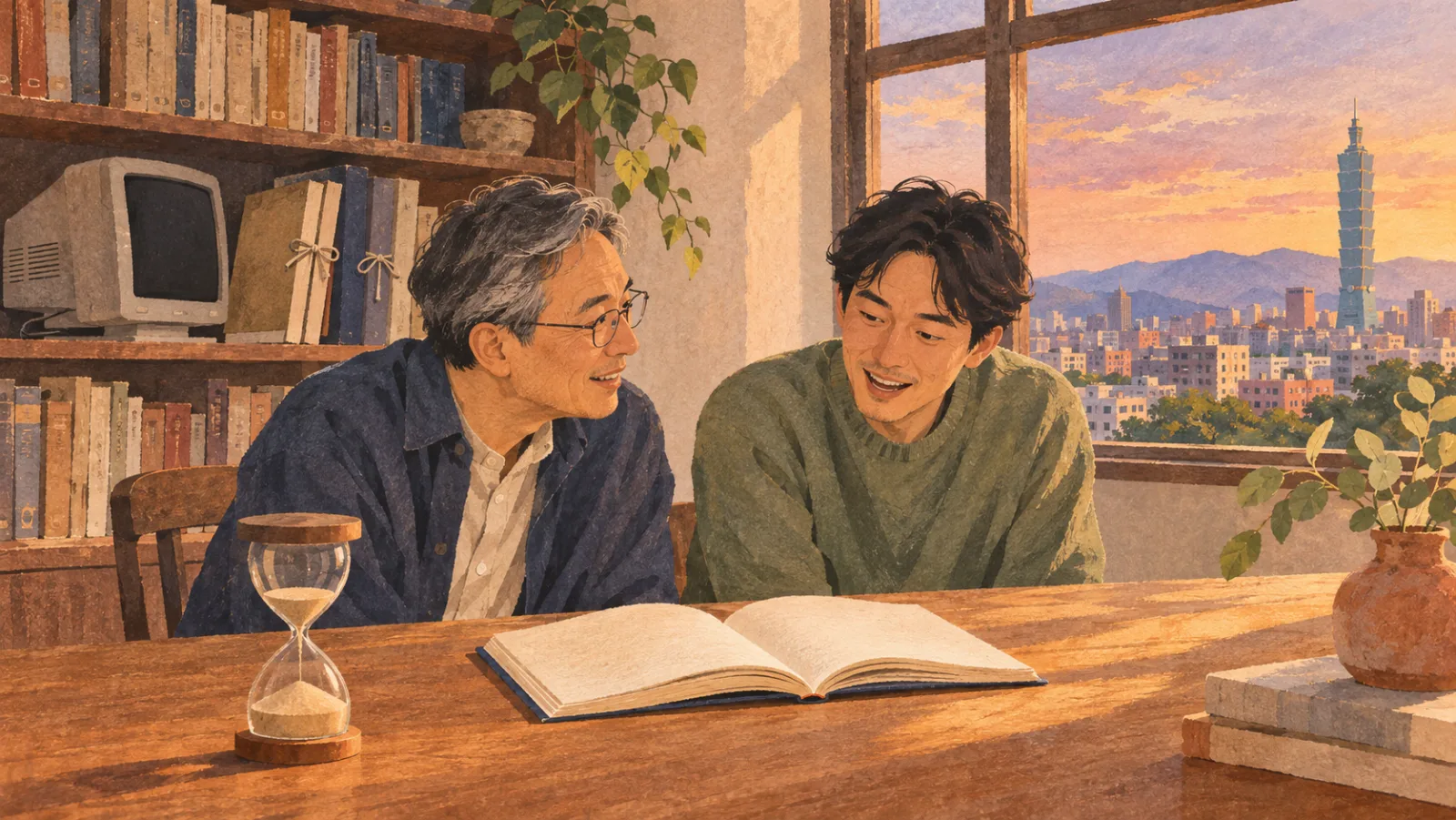
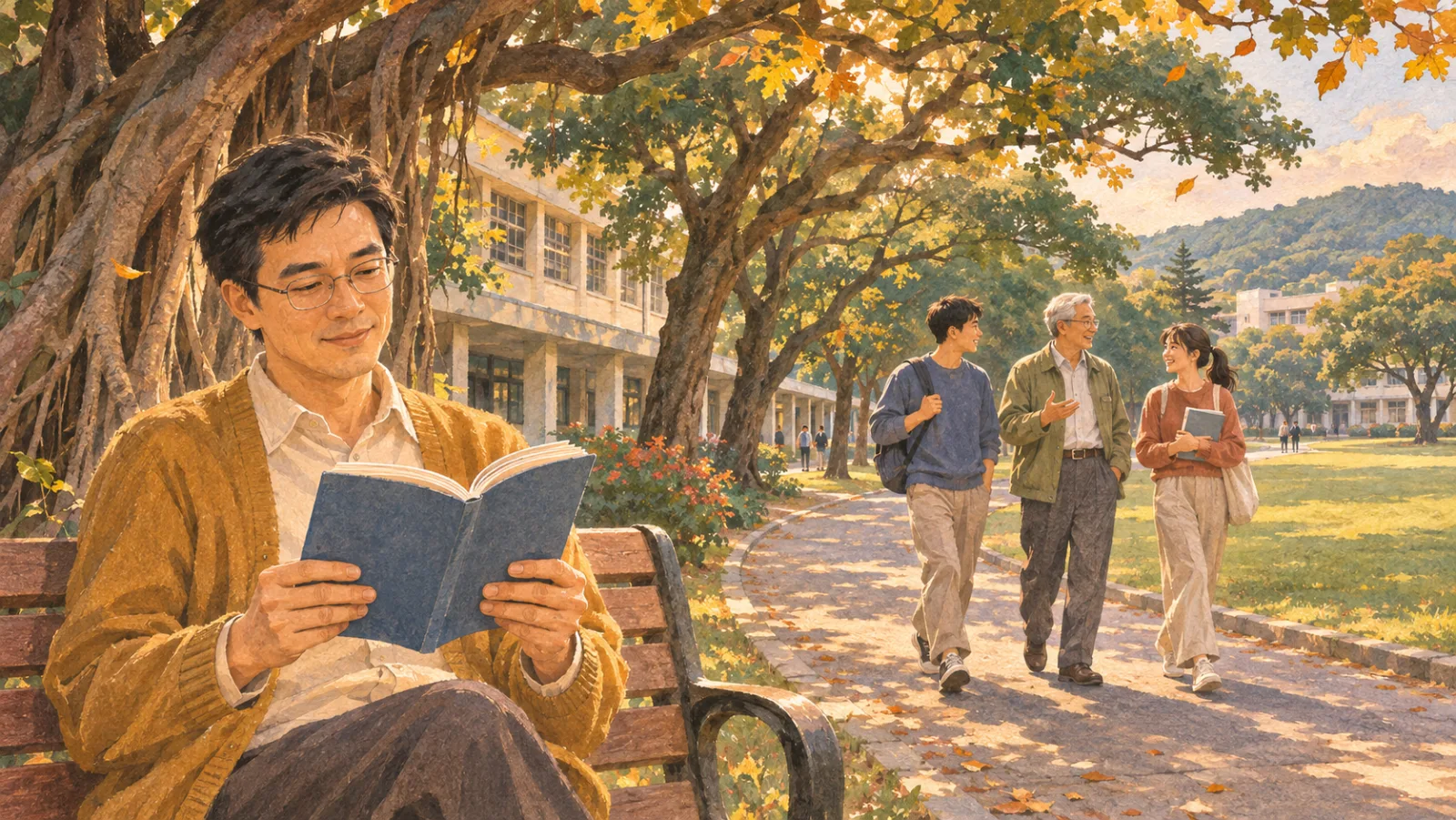
I have lived in Taipei for most of my life, but I am from Hsinchu. For children who grew up there, National Tsing Hua University was never just the name of a school. It was a source of pride. It sat right on the map of our everyday lives: a place to go on weekends, and the place our elders described as “where the kids who are good at school end up.”
So when I had the privilege of reading Academician Lih-Juann Chen’s Sixty Years of Hsinchu Tsing Hua: Lih-Juann Chen’s Life in Education and Thoughts on Running a University (opens in a new tab) (Chinese edition), I naturally read it more slowly than I would most memoirs. The Hsinchu Teachers College Affiliated Elementary School, Hsinchu Senior High School, and the Tsing Hua campus on Guangfu Road are all places I know well. The years behind those names are what Hsinchu really looked like around the time I was born. Reading the book felt like listening to an elder from my hometown tell the story of how this city and this university grew up together.
Academician Chen, as my mother knew him
The book carries a more personal meaning for me as well. My mother, Chou Hsiu-yu, once worked alongside Academician Chen’s mother at the Union Industrial Research Institute of the Ministry of Economic Affairs. Because of that connection, Academician Chen was never a distant “academician” or “university president” from the newspapers in our family. He was an old family friend my mother would mention from time to time.
I am especially grateful to Academician Chen for sending me a copy, which let me read it as soon as it came out. Reading with that connection in mind, the first part of the book, about a family scattered by war and a boyhood in Hsinchu, felt especially warm. Between the lines I found not only a scholar’s coming of age, but also the story of a Hsinchu family that held together and lifted one another up through a turbulent era.
Separation as the starting point
The book begins in 1949. Chen came to Taiwan with his mother and three siblings and lost contact with his father, who remained on the mainland. Father and son were reunited in the United States more than twenty years later, but his mother had passed away the year before. The opening is written with restraint, yet it is the heaviest stone in the whole book.
It reminded me that many families who came to Taiwan after the war carry similar gaps and regrets. A mother settled in Hsinchu on her own with four children and saw them one by one into National Taiwan University; one of them would go on to become an academician and a university president. A family story like this is a small portrait of postwar Taiwanese society. Chen recalls that in his freshman year, his second sister was studying plant pathology and entomology at NTU and his brother electrical engineering, and the three siblings would meet on campus now and then to “ease their homesickness.” It is a single short line, and it moved me.
The education Hsinchu gave him
I especially loved the chapters on his elementary school and Hsinchu Senior High School. Principal Kao Tzu’s philosophy of “healthy and happy” schooling, and Principal Hsin Chih-ping’s motto of “sincerity, wisdom, health, and perseverance” with its balanced emphasis on moral, intellectual, physical, social, and aesthetic education, are shared memories for many people from Hsinchu.
Chen explains that these ideals shaped his approach to scholarship. Looking back after finishing the book, the thread is clear. He was raised on a well-rounded education in Hsinchu; as president he championed “openness, excellence, and sustainability,” cared about whether high school students could get an early taste of academic research (through the “High School Academic Train” program), and paid attention to the bond between the university and society. He took the good education Hsinchu gave him and gave it back to Hsinchu and to Taiwan. The appendix includes a tribute to Principal Hsin Chih-ping, a sign that he never forgot what his teachers gave him.
NTU and the years abroad: the making of a scholar
The NTU chapter is full of details that made me smile. At freshman orientation, the first lecture was about the Mukden Incident, and he admits it was “rather disappointing.” The men’s dormitory housed eight to a room with lights out at ten, so he moved off campus. He stayed at school the summer after his freshman year, tutoring to support himself and taking German at a cram school, which paid off later when he had to pass a second foreign language exam in the US. None of this is a grand achievement, but it is real, and it shows a diligent young man arranging his own education.
Even more moving were his roommates at the Lutheran student hostel, Yung-Sheng Liu and Shan Wang, who became lifelong friends. Years later, when Chen became president of Tsing Hua, he brought Liu on as vice president. A college friendship that, decades later, turned into running a university together: reading this, I envied the trust between people of that era.
He then went to the US, studying at the University of Minnesota and UC Berkeley and focusing on electron microscopy and materials science, before working at UCLA, Cornell, and the Xerox research center. In 1977 he returned to Taiwan to teach at Tsing Hua. For nearly fifty years since, his life has been inseparable from the university.
Steering Tsing Hua through its centennial
Chen became president of Tsing Hua in 2010, and his term coincided with the university’s centennial. The book covers the Tsing Hua Hundred Club, the reform of the grading system, the Hou Chin-Tui Lectureship, the Sustainability Fund, and Tsing Hua becoming the first public university to win Taiwan’s National Quality Award. For Hsinchu people, the Mei-Chu Tournament between Tsing Hua and National Chiao Tung University is an event we heard about from childhood, and the book mentions changes he pushed for during his term. It made me want to understand more of the thinking from the president’s side.
In his foreword, Chintay Shih recalls that during the centennial arts activities, he and Chen became “calligraphy classmates for a day.” That small story shows another side of Chen: beyond the eminent scientist and university president, a man still curious about new things.
Giving life back to education
The author’s preface is titled “Giving Life Back to Education.” After finishing the book, I think those words sum it up best. From a war-torn childhood to the presidency of Tsing Hua, from electron microscopes to discussions of AI policy, he supervised more than a hundred doctoral students and kept teaching, writing, and serving the public after stepping down. The education he received made him who he is, and he has spent his life passing it on.
For me, a Hsinchu native, this book gave Tsing Hua another layer of meaning. It is no longer just the campus scenery of childhood memories, but a place where a group of people spent sixty years, bit by bit, building up a city’s ideals of education. And because of my mother’s connection with the Chen family, I feel a thin, warm thread running between me and this history.
📖 Get the book (Chinese edition): Sixty Years of Hsinchu Tsing Hua: Lih-Juann Chen’s Life in Education and Thoughts on Running a University (opens in a new tab)
Next step
Bring this topic to your team
Vista Cheng speaks and runs workshops on AI workflows, writing and content systems for companies, schools and public agencies.