New thinking in event marketing: low-cost and high-return experience strategy to make the brand visible
This article was originally published in “Economic Daily”
On January 25, 2026, legendary rock climber Alex Honnold challenged to climb the outer wall of Taipei 101. This was not only a test of personal limits, but also became an unexpected urban marketing feast.
Picture this: when Alex is hanging from a skyscraper, broadcast live on Netflix, the thrilling footage goes viral on social media, with millions of netizens sharing his every move, and the logos of brand sponsors appear faintly but not obtrusively. In addition to demonstrating the valuable sportsmanship, this is also a model of event marketing.
Some people may say that tens of millions were spent on this event, and its scale is beyond the reach of small and medium-sized enterprises. However, as a marketing consultant, I have witnessed countless brands create viral effects through clever event or festival design with limited budgets.
Let’s start with Alex’s challenge and take a deeper look at how to market events or festivals in 2026 – focusing on how to achieve amazing results without breaking the bank.
New marketing opportunities in the era of budget constraints
In recent years, brand budgets have been tightened due to the aftermath of the epidemic and the economic downturn, but AI technology has brought new opportunities. In the past, traditional holiday marketing like Christmas or Halloween relied on huge advertising and celebrity endorsements, but now the key to success lies in small-scale, personalized experiences that can be amplified on social media. This means that brands can potentially create a festive atmosphere without having to rent a venue or hire a celebrity.
How to get good results without spending a lot of money? Let’s break down the core strategy.
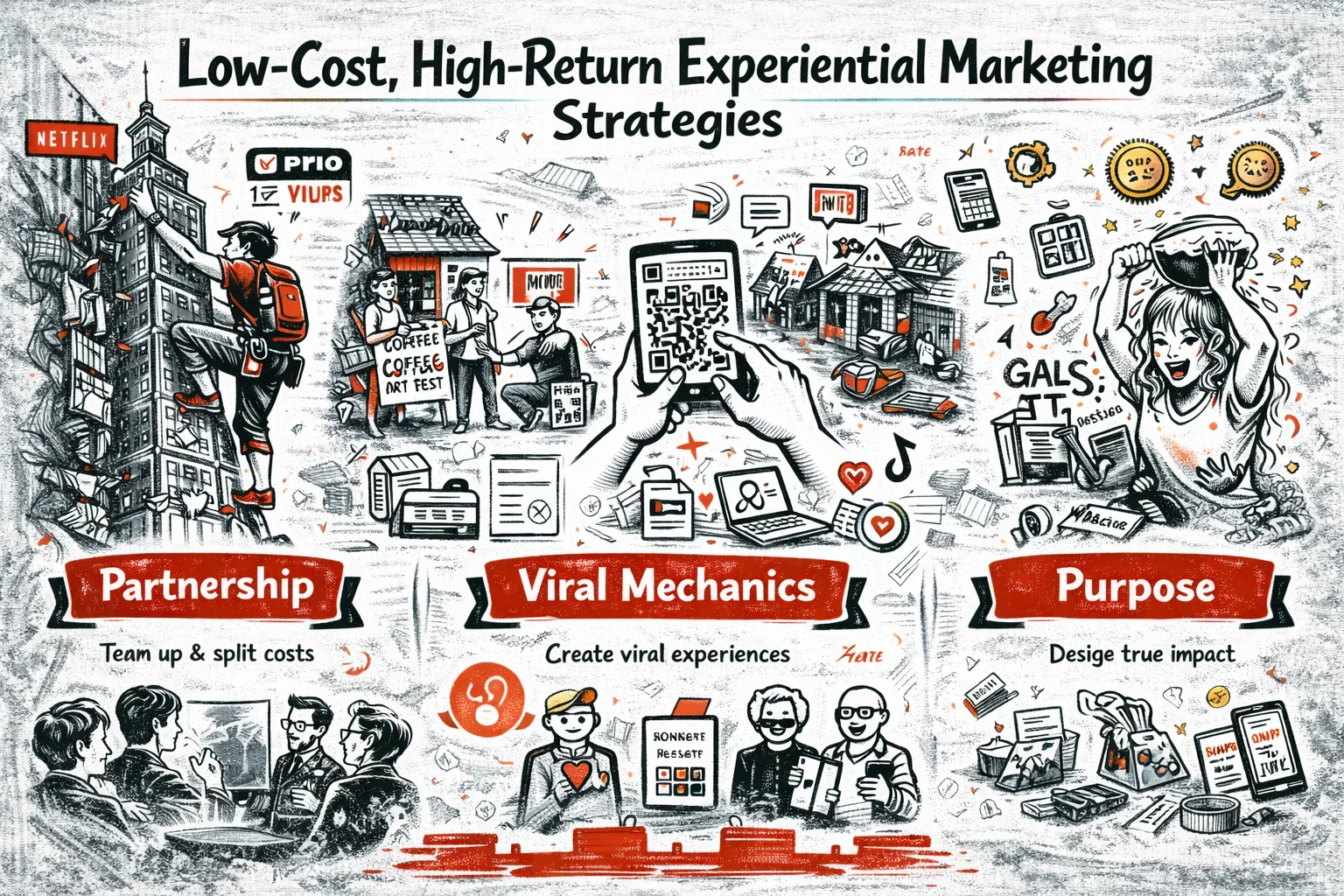
Strategy 1: Find the right partner and share the costs
Going it alone is obviously outdated. Today’s digital marketing emphasizes ecosystem cooperation. Alex’s challenge has been sponsored by sports brands and the likes of Netflix, who provide resources in exchange for exposure. Similarly, brands can partner with influencers or communities to host small festivals.
For example, a coffee shop teamed up with local artists to hold a free “Coffee Art Festival” on the street, where the artists provided performances and the brand provided drinks. Cost sharing, exposure sharing.
Partner co-creation is not just an exchange of resources, but also a multiplier effect of creativity - when the stories of two brands are intertwined, unexpected chemical reactions can often be stimulated.
This model of Partnership and Co-Creation is the key to how Brand Story can resonate.
Strategy 2: Design virus mechanism and integrate technology
Viral marketing isn’t luck, it’s design. AI tools can help predict trends and design shareable content. For event marketing, brands can create limited-time challenges, such as “Complete tasks within 24 hours to win prizes,” which are amplified by TikTok’s algorithm.
In terms of festivals, think of the Halloween “Haunted House AR Game”: users scan the QR code with their mobile phones to enter the virtual haunted house and share photos. Nowadays, the cost of developing an app has been greatly reduced, but it can achieve global dissemination effect.
The key to viruses is emotional connection - humor, surprise or resonance. What makes people want to share is never the product itself, but the moment that makes them feel “this is me”.
Make good use of the power of video marketing and combine it with immersive technologies such as AR and VR to enable your activities to gain a higher reach on social platforms.
Strategy Three: Driven by Purpose, Win Loyalty
Today, consumers around the world are increasingly paying attention to ESG. Brands can design low-cost green festival activities, such as a “zero-waste picnic” for Earth Day, and invite the community to participate. The brand only provides reusable props. The cost is low, but it can build a brand image.
This approach of Sustainability and Purpose-Driven Events can not only attract consumers who identify with the brand’s values, but also stand out in a highly competitive market.
Classic Case: Inspiration from the Ice Bucket Challenge
In 2014, the ALS Association’s Ice Bucket Challenge “ALS Ice Bucket Challenge” was a classic viral marketing campaign. Participants had to take a selfie pouring ice water, nominate others, and donate to support ALS research.
The budget was almost zero and the campaign relied solely on social media. The result?
- Raised $115 million
- More than 17 million participants worldwide
- Celebrities such as Bill Gates, Lady Gaga and Robert Downey Jr. all responded
The most successful viral campaigns are often those in which participants become protagonists. When everyone can be part of the story, communication happens naturally.
The key is simple mechanics and emotional appeal. If a similar challenge is to be held in 2026, AI technology and NFT donations can be integrated to increase interaction. This is the core logic of how-to-detonate-a-pop: first manipulate the choice, then display the choice.
The biggest budget is your imagination
As the time sequence enters 2026, event marketing is no longer a money game, but a more challenging wisdom game. Brands that take inspiration from the adventures of Alex Honnold and focus on user engagement, data insights, and purpose can do more with less.
Remember, your biggest budget is your imagination. Let’s create the next viral moment together.
The essence of event marketing is never how much money you spend, but whether you can impress people. When your brand story connects with your audience’s lives, and when your events make participants feel like they are the protagonist of the story, communication will spread like wildfire.
Further reading:
- Brand story must be resonant
- Make good use of video marketing to effectively capture consumers’ attention
- How to detonate a trend? Manipulating choices?
External resources:
📖 深入探索相關主題