Escape from pain to a free life: Xiaozhou’s systematic entrepreneurial methodology
In this era of information explosion, knowledge payment has become a booming industry. As one of the representatives of the knowledge payment field in Greater China, Little Boat is undoubtedly worthy of in-depth study and reflection.
Xiaozhou’s entrepreneurial story: from difficulty to freedom
Awakening from the trough
The story of the boat begins in Tokyo, Japan, in 2017. At that time, she had just graduated from graduate school and was facing tremendous pressure to find a job. As a foreigner and a woman, she encountered unprecedented setbacks in Japan, a patriarchal society. I interviewed with more than 30 companies, but all of them were rejected. This experience made her deeply understand how painful it is to work hard in an environment that does not recognize yourself.
Eventually, she entered a job in a Japanese company, getting up at 7 a.m. every day and not going home until 12 p.m. This kind of high-intensity work makes her lose time to invest in herself and spend time with her family. What makes her even more desperate is that even if she works hard all her life, she still can’t afford a car or a house. This dilemma of exchanging time for money became the catalyst for her determination to change.
 ▲ Xiaozhou shares his journey from time dilemma to financial freedom
The arrival of the turning point
The real turning point occurred when he fainted after a social gathering. Overexertion caused her to lose consciousness in the toilet of the izakaya, hitting her head on an iron pillar and bleeding all over her body. This incident completely awakened her: she was unwilling to continue living in a foreign country, sacrificing her health and happiness, and living an ignoble existence for a fixed salary. So, she decisively resigned and started a real Internet entrepreneurial journey.
Four months after resigning, she was forced to be bedridden from knee surgery. This seemingly unfortunate time turned out to be a turning point in her life. She used this time to frantically research ways to make money online, working from 7 a.m. to 2 a.m. every day without a day off for three months.
“People will not go all out to pursue happiness, but they will definitely go to great lengths to escape pain.”
Core methodology: IDEA blueprint system
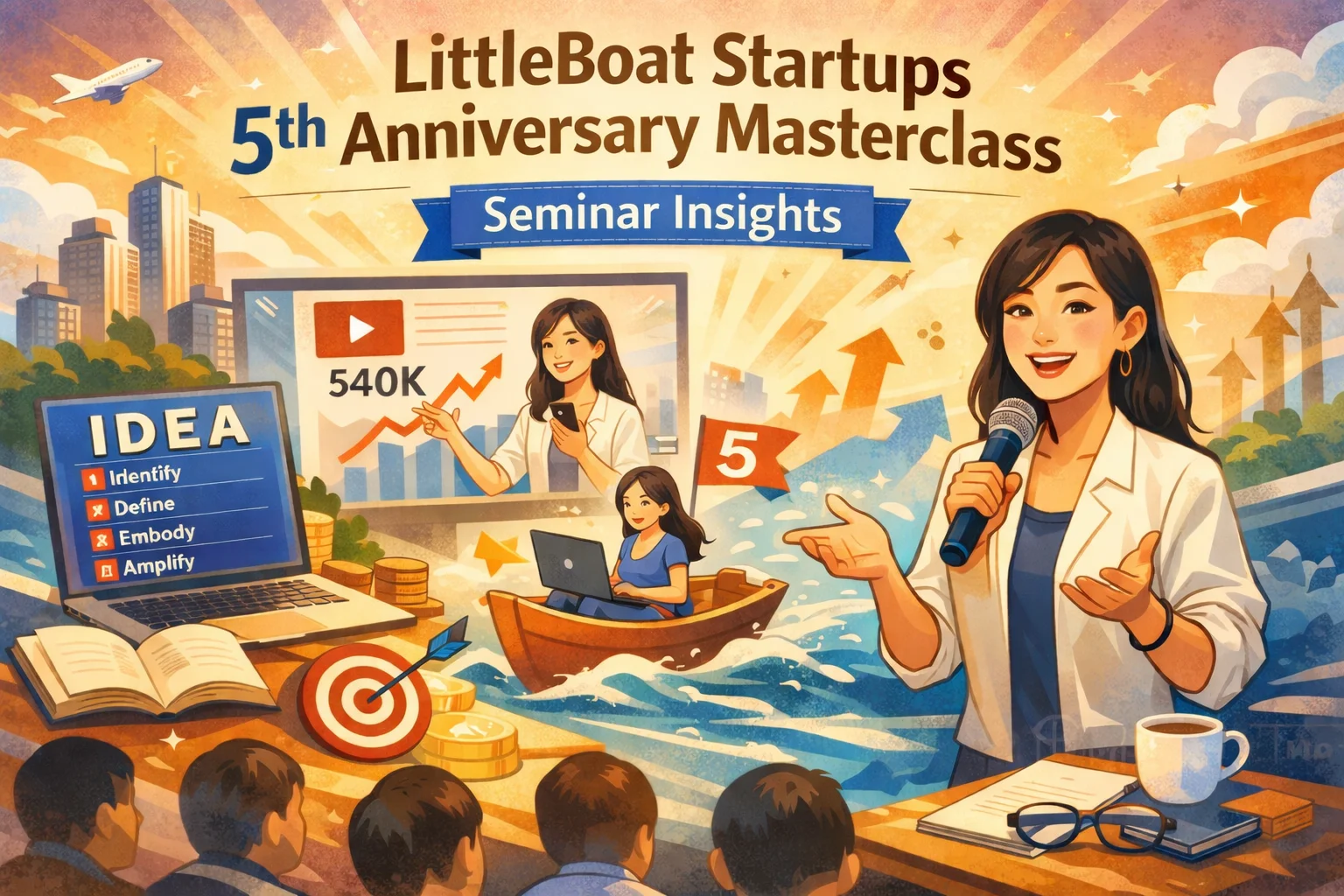
In this lecture, Xiaozhou fully disclosed her core methodology—the IDEA blueprint system—for the first time. This system is the essence of her five years of entrepreneurial experience, covering the complete process from identifying one’s own strengths to amplifying personal value.
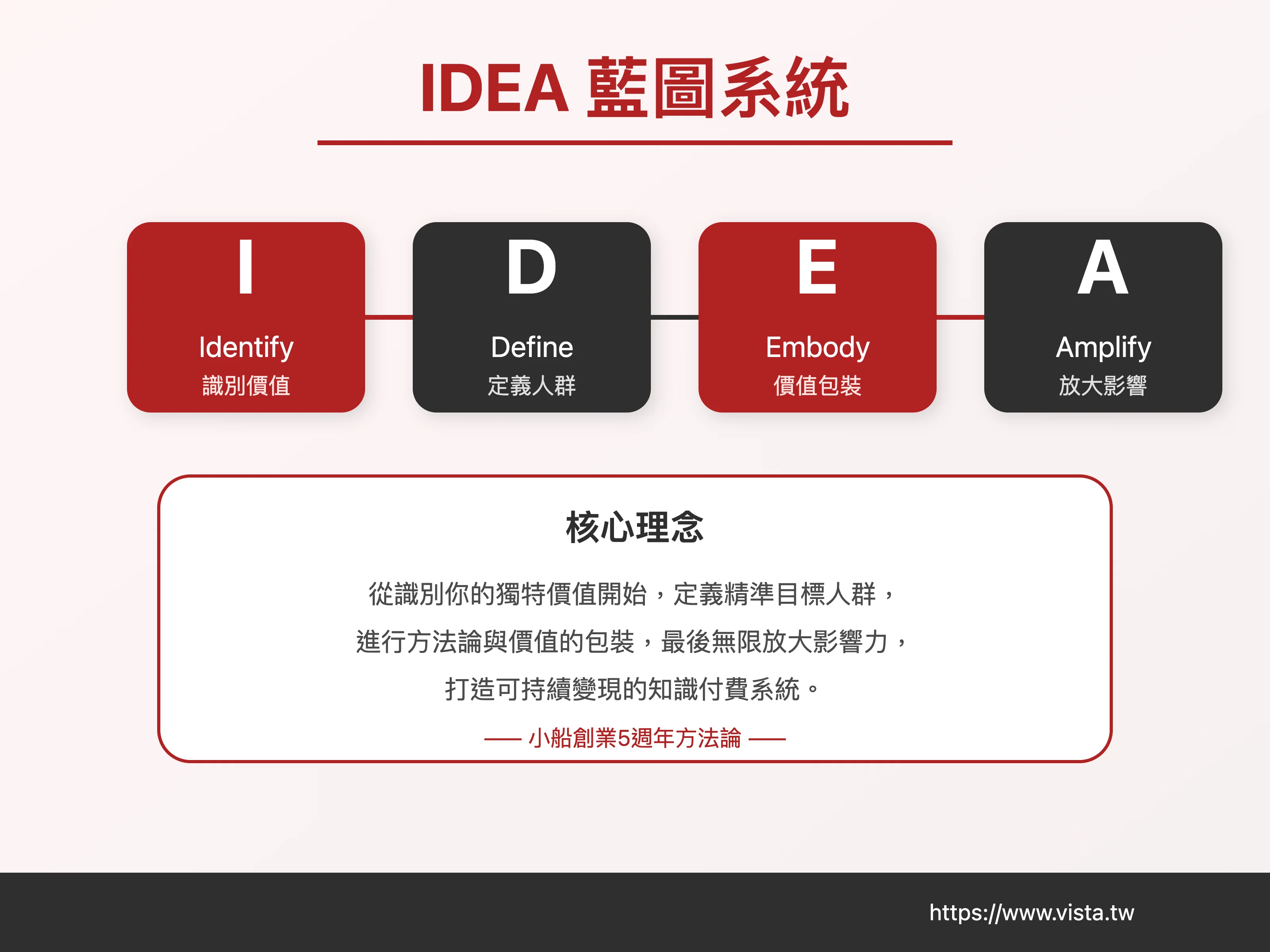 ▲ IDEA blueprint system: the core methodology of Xiaochuan’s five years of entrepreneurial experience
I — Identify: Discover your unique value
The first step is to identify your field and evaluate whether your knowledge and experience have the value to be developed into a course? The most critical thinking change at this stage is: Don’t think about what I can teach, but what do users want to learn? The example of the small boat chemist vividly illustrates this truth: if a professional chemist directly sells molecular structure courses, almost no one will pay; but if the entry point is changed to how to guide children to be interested in science by doing simple and safe experiments at home, the market acceptance will be completely different.
“Don’t just think about what I can teach, but think about what users want to learn.”
Key indicators for evaluating the value of a course include: the level of learning threshold, the popularity of online discussions, and the return the course can bring to students. Xiaozhou particularly emphasizes the importance of return-based results: the bigger the problem your course can help students solve and the higher the return it can bring to them, the higher the value of your course will be, and the higher the price can be set.
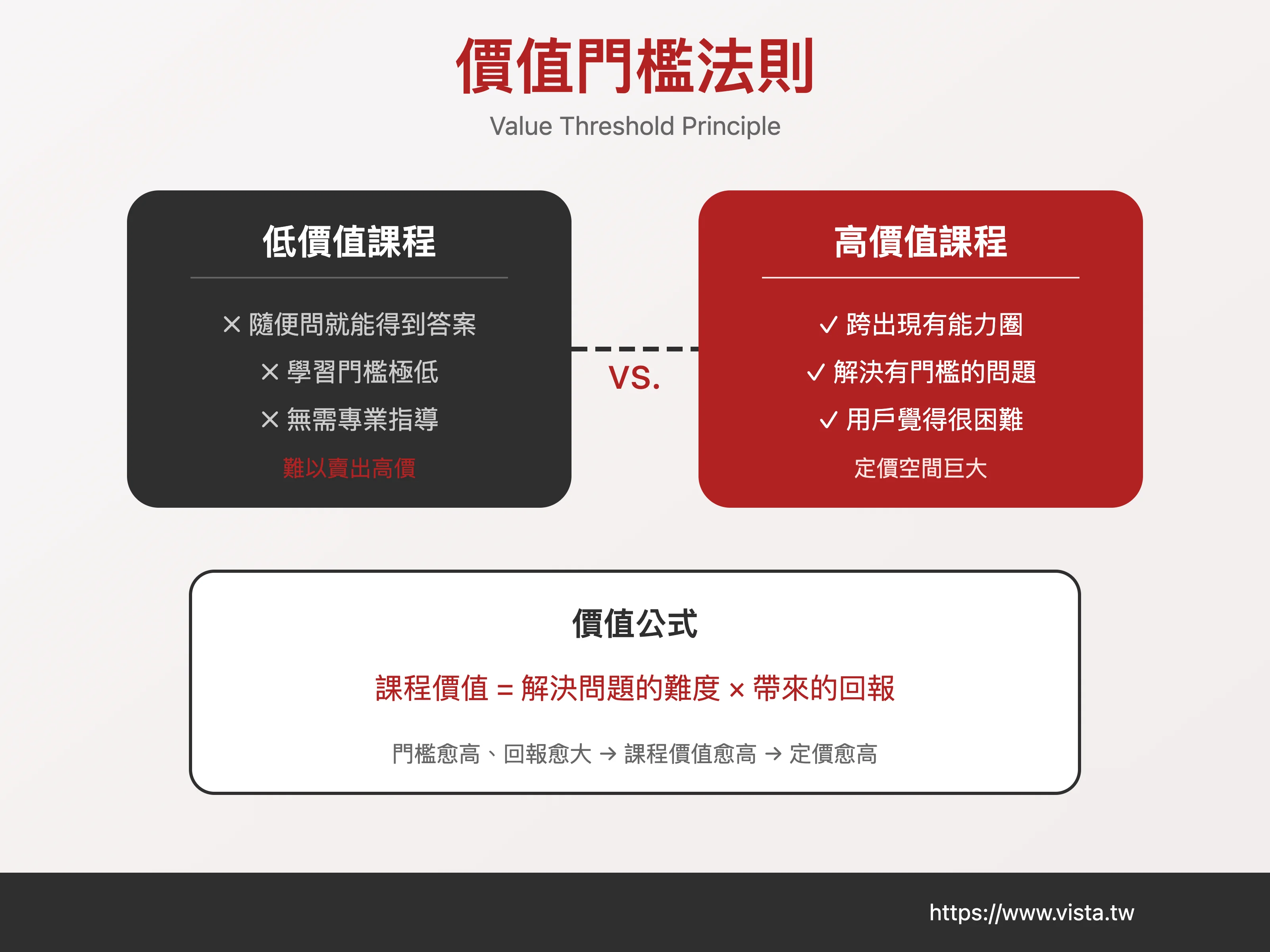 ▲ Value Threshold Law: The core logic of course value and pricing
D — Define: Pinpoint your target group
The second step is to find the precise target group based on the fields you have identified. The core concepts at this stage are trust and reverse marketing. Different ethnic groups have different problems and lifestyles. Only by fully understanding the user groups who will buy your courses can you develop the most appropriate course plan based on their attributes.
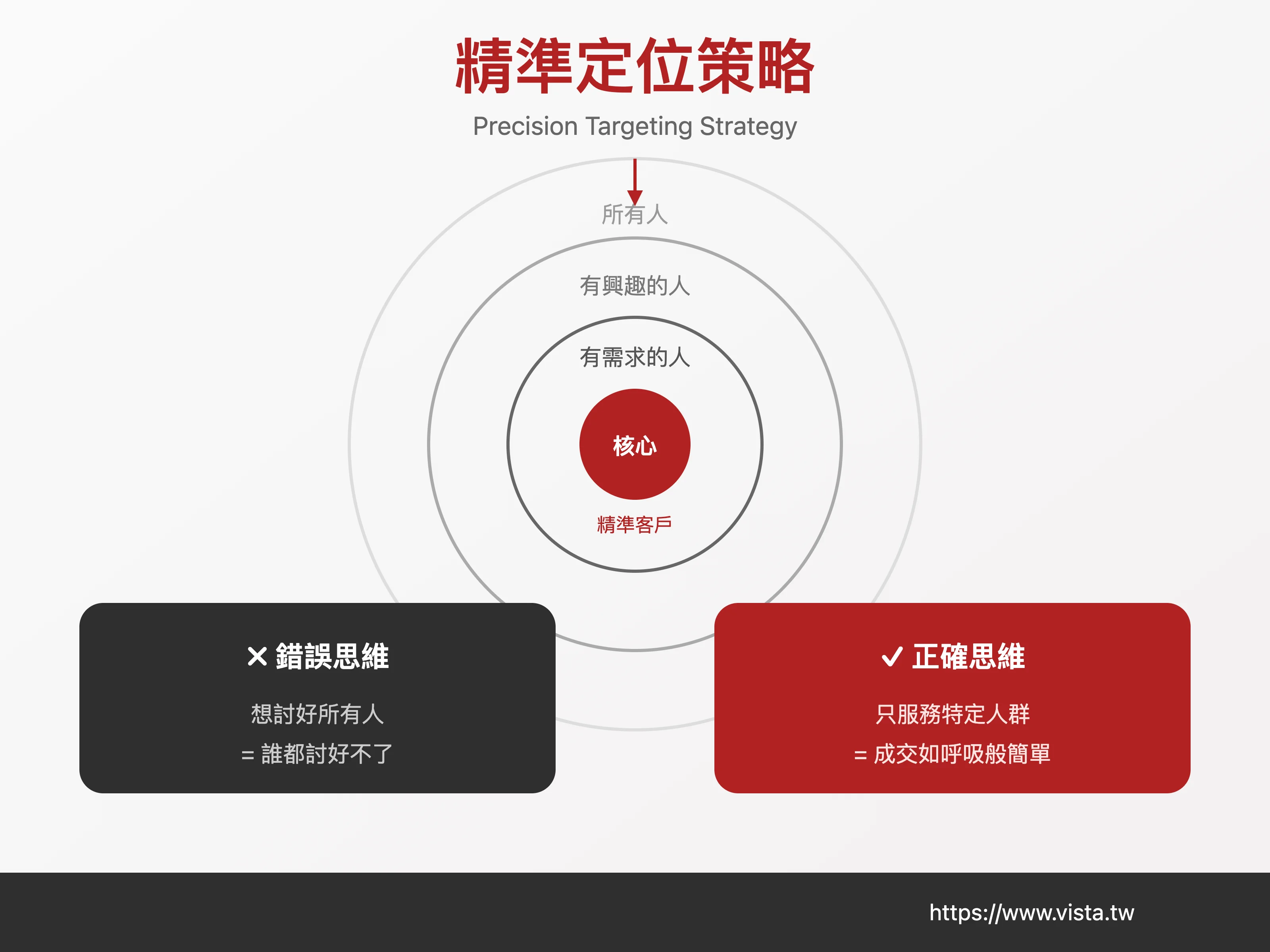 ▲ Precise positioning strategy: find your ideal target group
Xiaofune used her own experience of buying makeup lessons while working in Tokyo as an example: As a busy working woman, she was reminded by her boss that she needed to learn makeup. There are all kinds of makeup courses on the market - Korean, Japanese, young, and temperament - so she doesn’t know which one to choose? Until she saw a “15-minute full makeup course for lazy people in the workplace” offered by a small KOL, which completely met her needs at the time, and she immediately paid for it.
“After accurately targeting the target group, closing a transaction can really be as easy as breathing.”
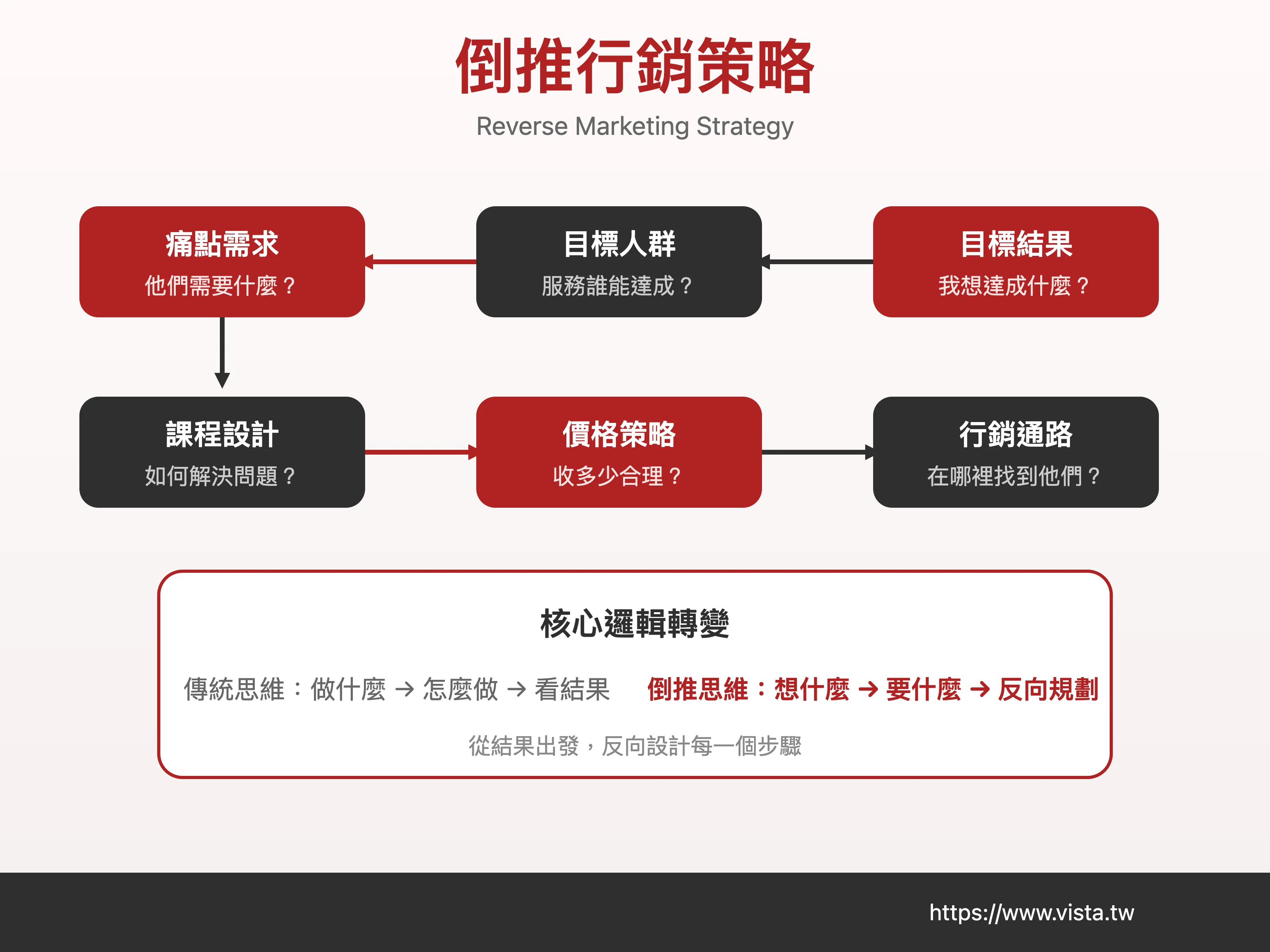 ▲ Backward marketing strategy: starting from target customers, planning products and services backwards
E — Embody Value (value packaging): Let users feel your value
The third step is to package the methodology and value. The value of a course lies not only in the content itself, but also in how the content is presented. Good packaging can make users feel a higher sense of value psychologically, making them more willing to pay. This stage requires thinking about: how to use the most persuasive way to show target users the changes your course can bring to them.
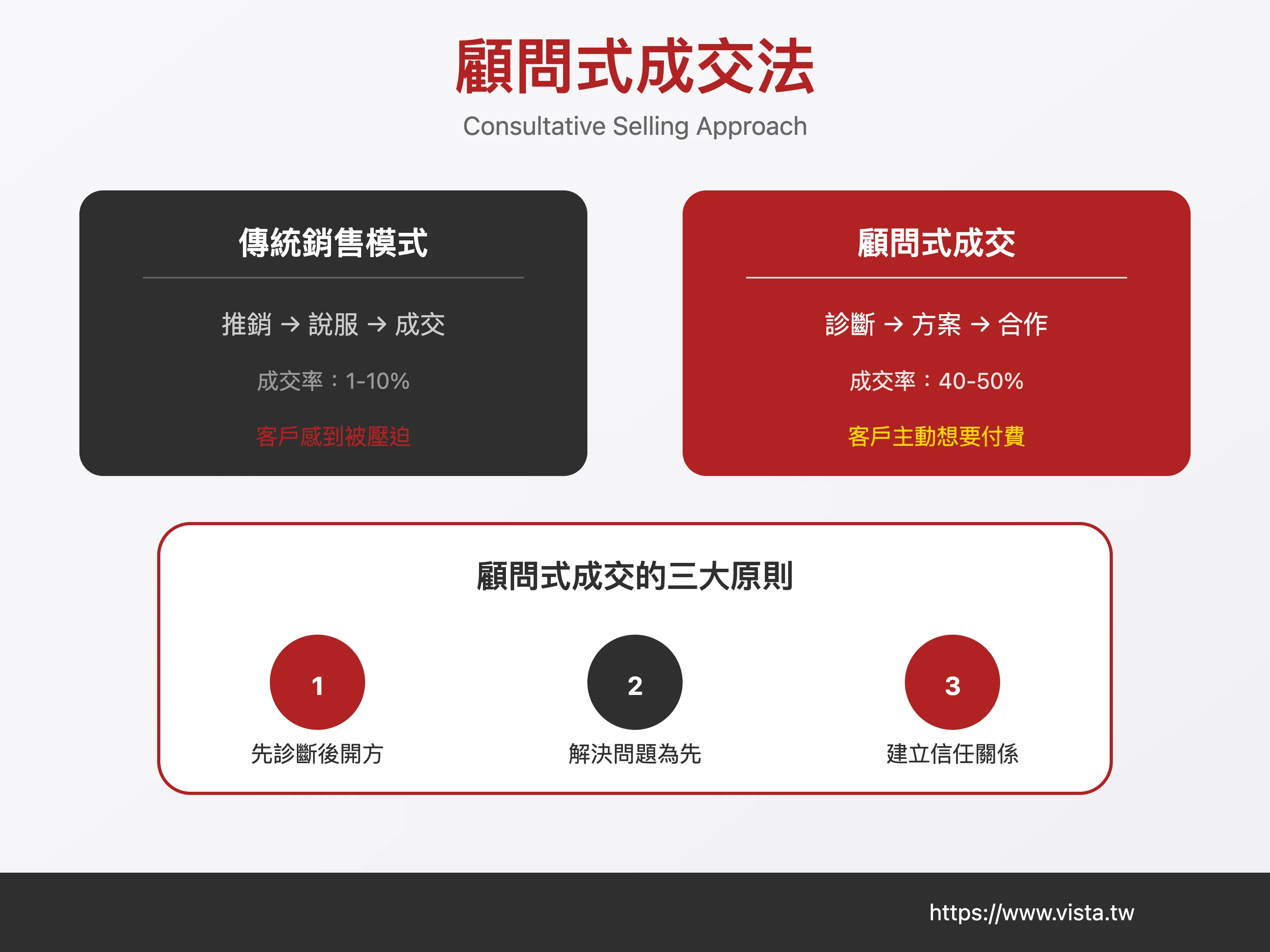 ▲ Consultative transaction method: use professional services to increase transaction conversion rate
A — Amplify: infinitely expand your influence
The fourth step is to amplify your product and personal value, raise your level, and finally make sales. The focus of this stage is to establish a personal brand, expand influence, and establish an automated sales system. Xiaochuan emphasized that to make courses, one must not only be able to make them, but also be able to sell them; not only must be able to sell them, but also be able to sell them continuously. Only by establishing a complete sales funnel can the ideal state of “once production, continuous income” be achieved.
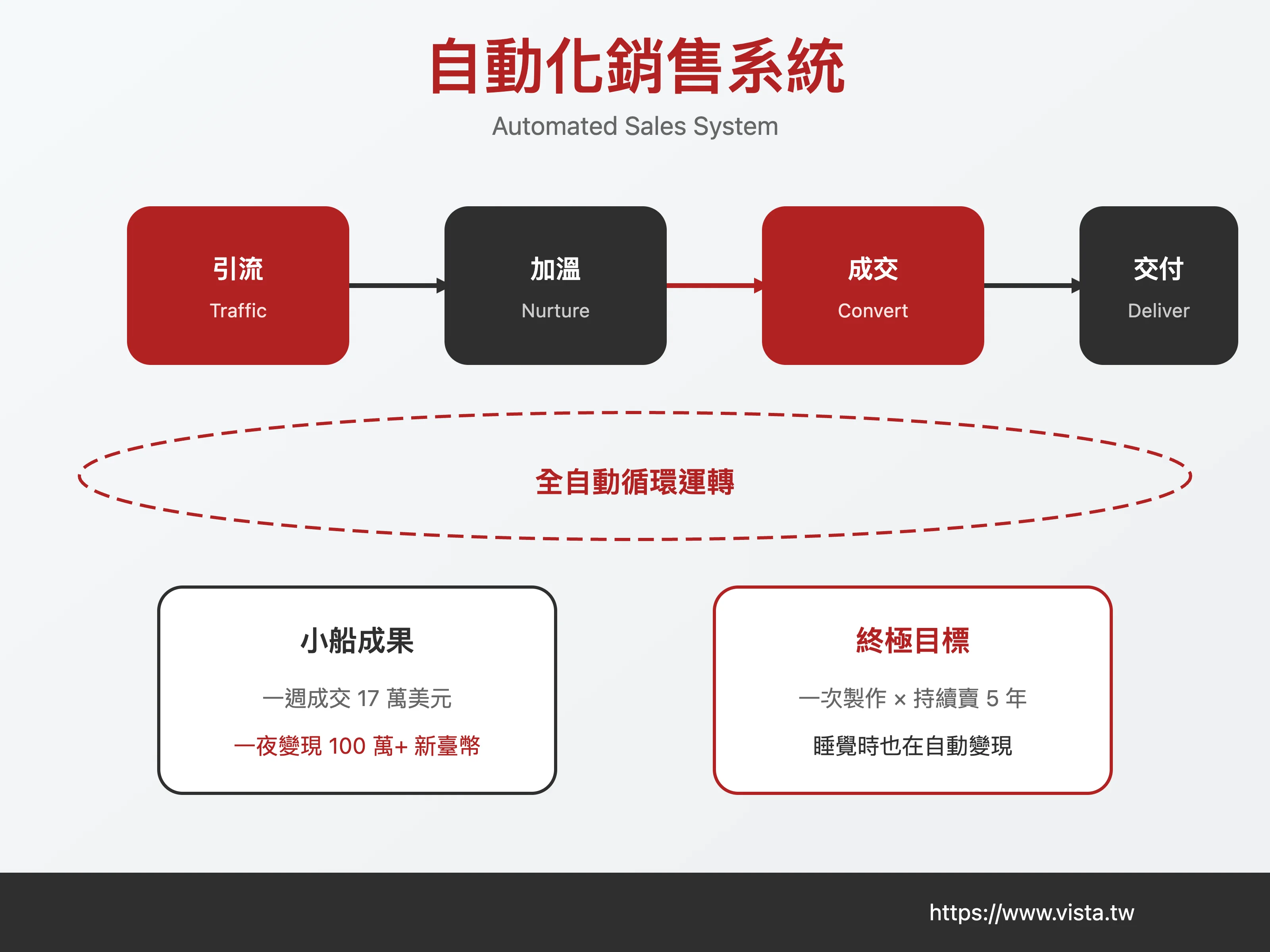 ▲ Automated sales system: Establish a sales funnel with continuous revenue
Featured on Boat’s YouTube channel
If you want to have a deeper understanding of Xiaochuan’s entrepreneurial philosophy, we recommend watching the following video:
For more exciting content, please subscribe to Little Boat’s YouTube channel.
Personal Reflection: Inspiration as a Lecturer, Consultant and Writer
Reflections on the identity of a lecturer
As a lecturer, Xiaochuan’s lecture made me deeply reflect on the nature of teaching. Traditional teaching is often knowledge-oriented: teachers teach whatever knowledge they have. But Xiaozhou’s methodology is result-oriented: whatever results the students want, the course is designed. This change in thinking is a must for any lecturer who wants to survive in the knowledge economy era.
Another important inspiration is the concept of minimum viable product (MVP). Traditionally, we believe you have to have perfect course content ready before you can start selling. But Xiaozhou’s method proves that it is more efficient to test the market with the simplest solution first and then develop courses after confirming that someone is willing to pay. This logic of “sell first and build later” is of great value in reducing entrepreneurial risks and accelerating the return of funds.
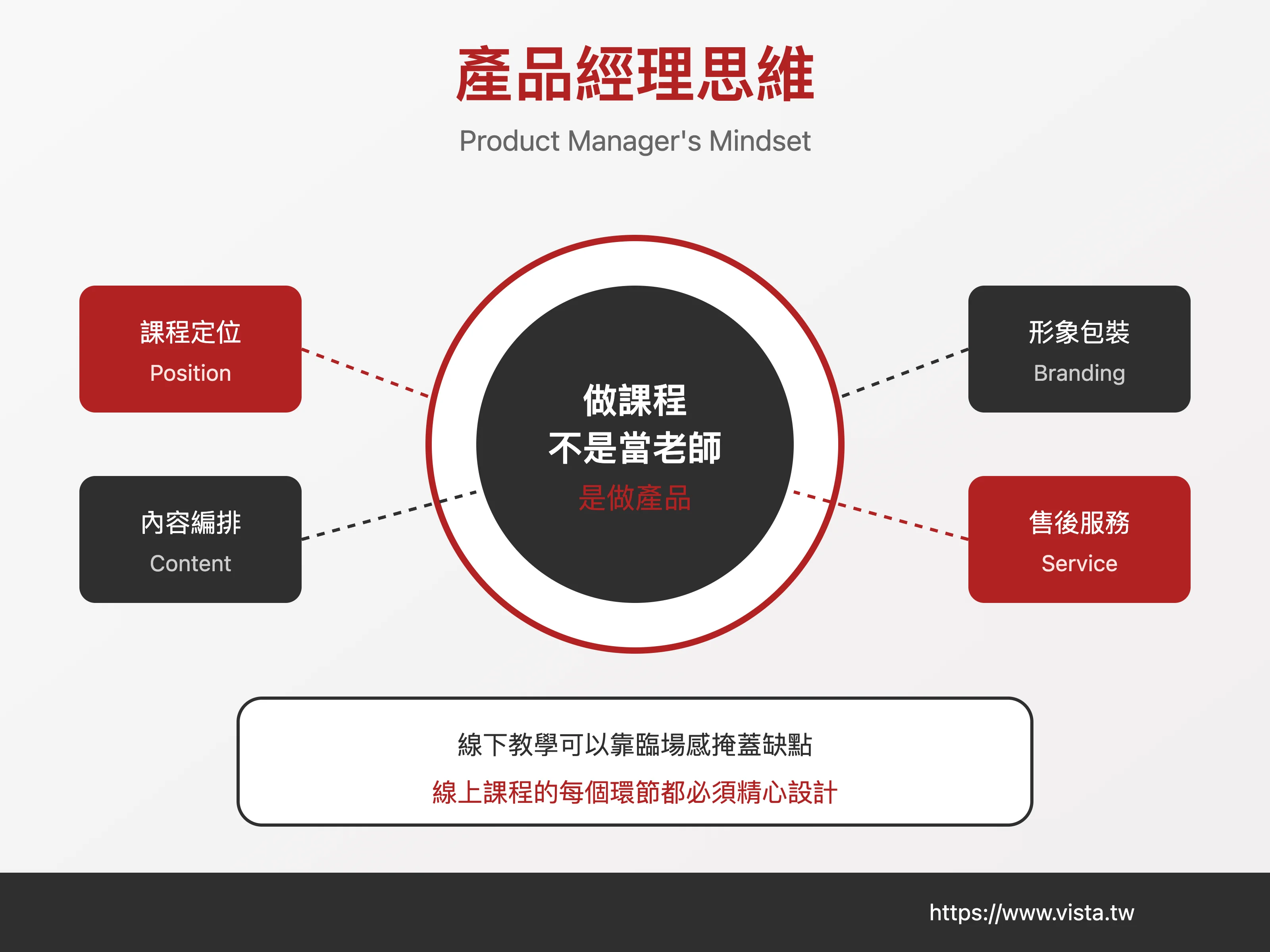 ▲ Product manager thinking: Use MVP concept to quickly verify market demand
Reflections on the identity of a consultant
As a consultant, I often help clients make business decisions. The concept of “backward marketing” mentioned by Xiaozhou also inspired me in my consulting work. Many times, customers will come to me and ask me what products should I make and what market should I enter? But the correct question should be: What kind of people do you want to serve, what pain points do these people have, and what problems can you help them solve. Starting from target customers and planning products and services backwards is the more correct business logic.
「不是先做什么再想能赚多少,而是先想清楚想要什么结果,再反向规划每一个步骤。」
The “Golden Customer Survey Method” emphasized by Xiaochuan also inspired me a lot. Before you can develop a strategy for your clients, you must have a deep understanding of their target users. This kind of survey is not an empty questionnaire, but a one-on-one in-depth interview to discover the real pain points and needs of users. Only in this way can we design products and services that are truly valuable and can truly be sold.
Reflections on the identity of a writer
As a writer, Xiaozhou’s lecture also made me rethink the relationship between content and products. Traditionally, writers write to express themselves and spread knowledge. But in the era of knowledge economy, writing can also become a product - a product that can help readers solve specific problems and achieve specific goals. This change in thinking transformed writing from an artistic activity into a commercial activity.
The success of Xiaochuan also proves the importance of personal brand in the era of knowledge economy. She is not only selling courses, but also selling the boat brand. Her YouTube channel, entrepreneurial story, and values are all part of the brand. Building a strong personal brand is essential for any writer who wants to succeed in the knowledge economy.
Practical Suggestions: Transformation from Listening to Lectures to Actions
Step One: Identify Your Unique Value
Take an hour and really think about the following questions: What are you good at? What unique experiences have you had? What problem have you helped others solve? List these answers and then evaluate them using the value threshold criteria: How difficult would it be for someone else to achieve the same result themselves? The higher the difficulty, the greater the value of your knowledge.
Step 2: Define your target audience
Don’t try to serve everyone. Choose a specific group: who are they? where are they? What pain points do they have? What are they willing to pay for? The more specific the better. Remember the lesson of the boat: if you try to please everyone, you are destined to please no one.
“If you want to please everyone, you are destined to please no one.”
Step 3: Verify market demand
Test the market demand before investing a lot of time in creating a course. You can confirm that someone is really willing to pay for your course through social posts, one-on-one interviews, or even direct pre-sales. Having said that, if you can’t convince even 10 people, it means your positioning may need to be adjusted.
Step 4: Design a minimum viable product
Don’t pursue perfection, make a good enough version first. It could be a simple PDF guide, a live course, or even just a PPT. The key is to receive money first, get feedback first, and then continuously optimize and iterate based on the needs of students.
Step 5: Establish a sales system
A single transaction is hard-earned money, and systematic transactions are passive income. Designing your sales funnel: how to drive traffic? How to heat? How to close the deal? How is it delivered? How to get referrals? When this system can operate automatically, you truly have an asset, not just a job.
Five years of experience, lifelong benefits
Xiaochuan’s fifth anniversary public lecture is not only a teaching on how to sell courses, but also an inspiration on how to live a free life. She used her own story to prove that as long as an ordinary person finds the right method and puts in enough effort, he can achieve a huge transformation in his life within three to five years.
The core of her methodology can be summed up in one sentence: “Begin with the end in mind and be result-oriented.” Instead of doing something first and then thinking about how much you can earn, think clearly about what results you want first and then plan every step backwards. This way of thinking is not only applicable to paid-for-knowledge entrepreneurship, but also applies to all aspects of life.
Finally, I would like to conclude with a sentence shared by Xiaochuan during the course:
“People will not go all out to pursue happiness, but they will definitely go to great lengths to escape pain.”
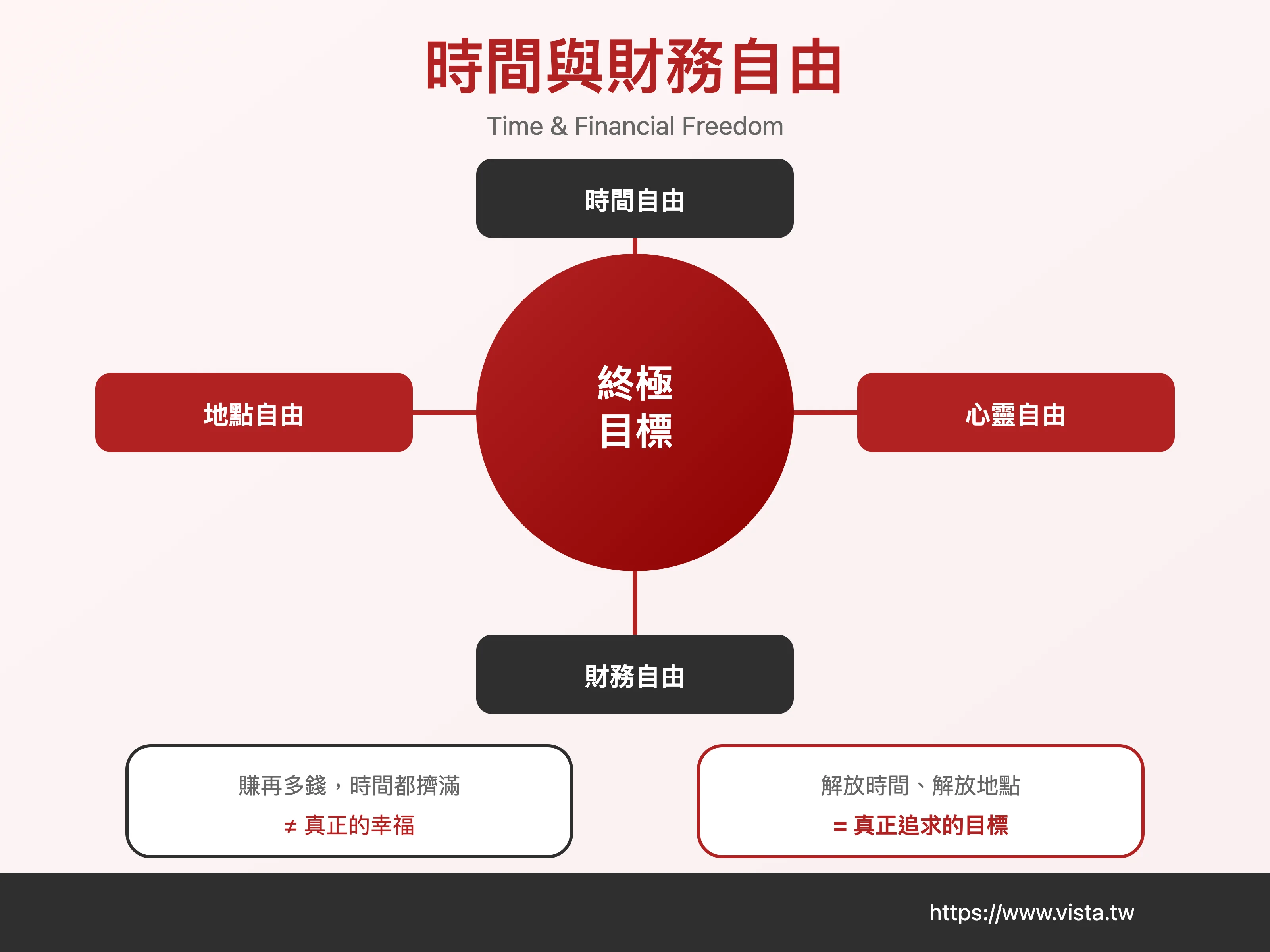
If you are not satisfied with your current life, if you desire more time freedom and financial freedom, then now is the best time to act.
Thanks to Xiaochuan for his selfless sharing, we can explore in a shorter time and take fewer detours to realize our entrepreneurial dreams.
Further reading
- Building a personal brand starts with conveying a unique point of view
- Building a personal brand starts with inventory of resources and precise positioning
- “The Value Proposition Era”: A blueprint to demonstrate the value of business models and services
- Low-cost-high-return experience strategy: Let customers become the strongest spokesperson for the brand
📖 深入探索相關主題