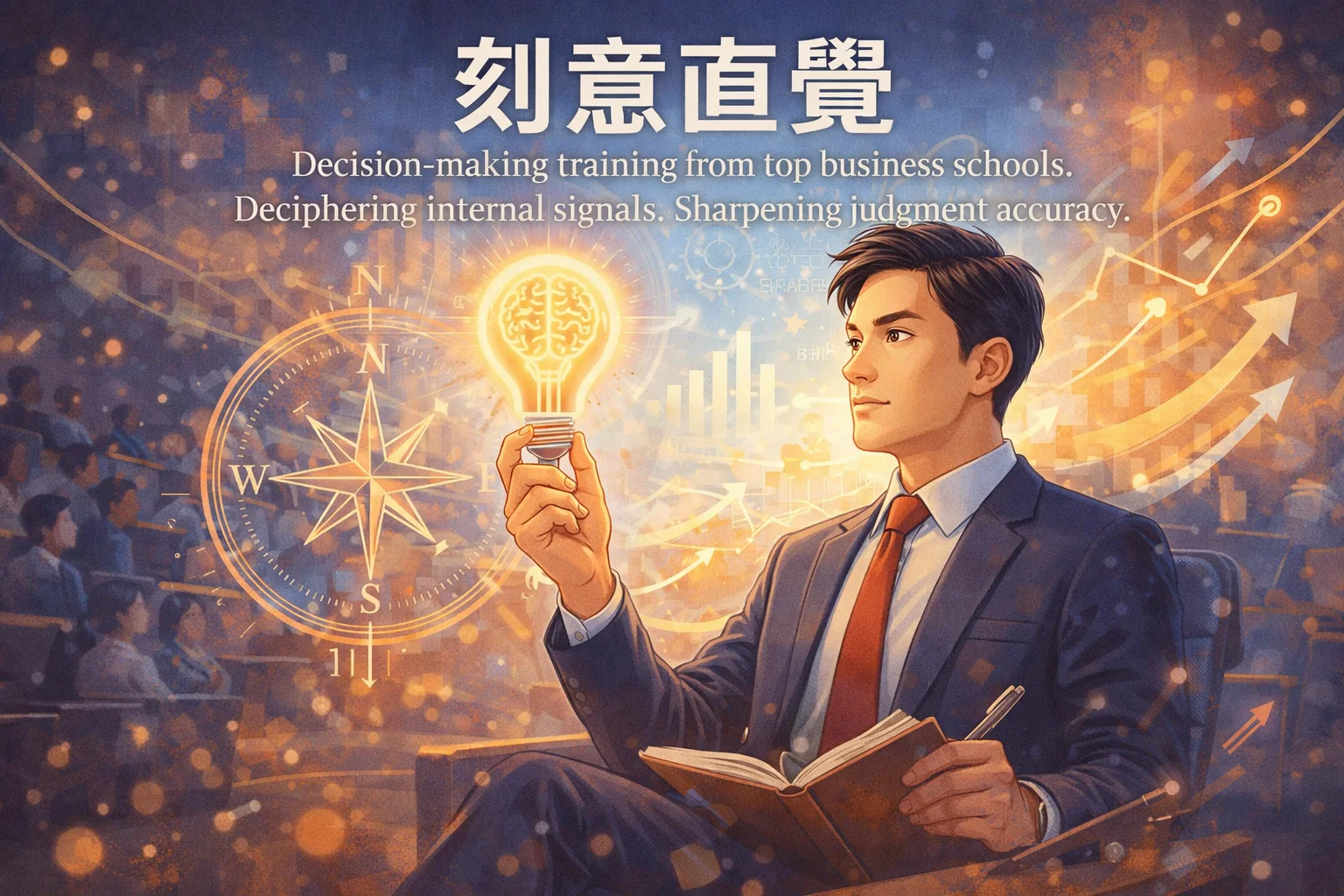
Intuition is not metaphysics, but an ability that can be practiced deliberately: Reading experience of "Deliberate Intuition"
I’ve always considered myself a very intuitive person.
Many times, when the information is incomplete and the logic is not clear, there will be a voice in my heart telling me: “This person can be trusted”, “This thing is not quite right”, or “This is the right direction”. It’s a feeling that’s hard to explain, but in retrospect, it’s surprisingly accurate.
So when I saw the book “Deliberate Intuition”, I was attracted immediately. The title of the book brings up a question I have been thinking about: What exactly is intuition? Is it a talent, or an ability that can be learned?
Intuition is not metaphysics, but a high degree of integration of the brain
The author Huang Leren was a professor at Harvard Business School and Wharton Business School. She tracked and interviewed thousands of business leaders, investors, Olympic athletes and other top people. What surprised her was that the key to success that these people repeatedly mentioned was not more data analysis or more rigorous logical deduction, but “intuition” - the kind of inner judgment that is difficult to describe but guides the direction at critical moments.
Intuition is the result of the brain’s high integration of external information and personal experience.
This sentence suddenly enlightened me. It turns out that intuition is not a mysterious sixth sense, but our brain working silently in the background, integrating past experiences, current observations, and subconscious perceptions into a “feeling” and presenting it to us.
This intuition may appear as a flash of insight, a subtle but strong sense of alertness, or a sense of shock that prompts you to take immediate action. Most of the time, we experience these feelings passively, treating them as accidental, uncontrollable coincidences.
But Huang Leren tells us: intuition can be trained.
From passive experience to active application
The core value of “Deliberate Intuition” is to use scientific methods to dismantle the “process of intuition formation”. The book explains in depth the four levels of intuition:
1. Physical level
Our bodies often notice things earlier than our brains do. The uneasy feeling of “stomach churning”, the alertness of “chilling down the spine”, or the excitement of “heating up the heart” are all signals sent by the body. Learning to listen to your body is the first step to developing your intuition.
2. Emotional level
Emotions are not just reactions, they are information. When you feel inexplicable resistance to an option, or feel unusually excited about an opportunity, there is often judgment behind these emotions that you are not aware of.
Emotion is the language of intuition. If you learn to interpret it, you will have an additional dimension of judgment.
3. Cognitive level
Intuition is not contrary to logic, but transcends logic. It is a conclusion reached by the brain after quickly processing a large amount of information without you knowing it. Sometimes you “just know” but you can’t tell why - that’s because cognitive processing is too fast and your consciousness doesn’t have time to catch up.
4. Psychological level
Trusting your own intuition requires psychological security. Many people don’t have intuition, but they don’t dare to trust their intuition. The book provides methods to help us build confidence in inner signals.
My intuitive experience: choice and adventure
As I read this book, I kept thinking of my own experience.
Years ago, I was working well in a magazine, but a voice kept telling me: “It’s time to come out.” At that time, I couldn’t give a specific reason. With a stable job, good income, and friendly colleagues, there was no logical reason to leave. But the voice became stronger and stronger, as if the inner compass kept pointing in another direction.
In the end, I chose to believe that voice, left the familiar environment, and started working as a training lecturer, consultant, and writer.
Looking back, it was one of the best decisions I ever made. If I had only listened to logic and looked at data at that time, I might still be in the same place and miss all the possibilities that followed.
Intuition won’t give you all the answers, but it will give you direction.
This book made me understand: what I felt at that time was not a blind impulse, but the judgment given to me by my brain after integrating all the signals. I just chose to listen.
💡 Use intuition to choose new tools and realize your ideas with AI
Many times, we intuitively know that we should try new things, but we are blocked by “not knowing technology”. Vibe Coding breaks this limitation - describe your ideas in natural language and let AI help you make it.
Trust your gut and use the right tools to make it happen.
In the AI era, intuition is more important
There is a point in the book that particularly struck me:
In a world full of AI and data analysis, the smartest choice is not to look a little further, but to go within and learn to trust your intuition.
This may sound counter-intuitive (pun intended), but it makes sense if you think about it. When everyone can use AI for analysis and data to make decisions, “analytical capabilities” themselves will no longer be scarce. What is really scarce are those things that data cannot capture: judgment of people, sense of trends, and grasp of opportunities.
These all require intuition.
I deeply understand this in the process of running personal brand. Many decisions have no standard answer: Should we take this case? Do you want to write about this topic? Want to try this new tool? Data can only tell you what happened in the past, but it cannot tell you where to go in the future.
At this time, intuition is your most important guide.
How to develop your intuition?
The book proposes a set of practical models. I have compiled some of the most interesting exercises:
1. Establish an “Intuition Diary”
Record a moment each day when you had a strong intuitive feeling. What is the situation? What do you feel? What was the result? Through such records, you will understand more and more how your intuition operates.
2. Deliberately practice “pause”
Give yourself a few seconds of blank space before making a decision. Don’t rush to analyze or act. Give your inner voice a chance to emerge. Many times, intuition comes in that pause.
3. Review your “perfect moments”
Think back to those times in the past when you “just knew” and it turned out to be right. Analyze the situation, your state, and the signals you are receiving. This will help you recognize patterns when your intuition emerges.
4. Practice body awareness
Intuition often sends signals through the body. Take some time to practice mindfulness, meditation, or a simple body scan to increase your sensitivity to the sensations in your body.
Who is this book suitable for?
According to my reading experience, the following types of readers will particularly benefit:
- Executives or entrepreneurs who often need to make decisions: Learn to make judgments with incomplete information
- Analytical personalities who feel they “think too much”: Recover the neglected inner wisdom
- People who are interested in intuition but find it mysterious: Understand intuition from a scientific perspective
- Professionals who want to improve their judgment: one more dimension of decision-making
- People at the crossroads of life: Learn to listen to your inner voice
My recommendation reasons
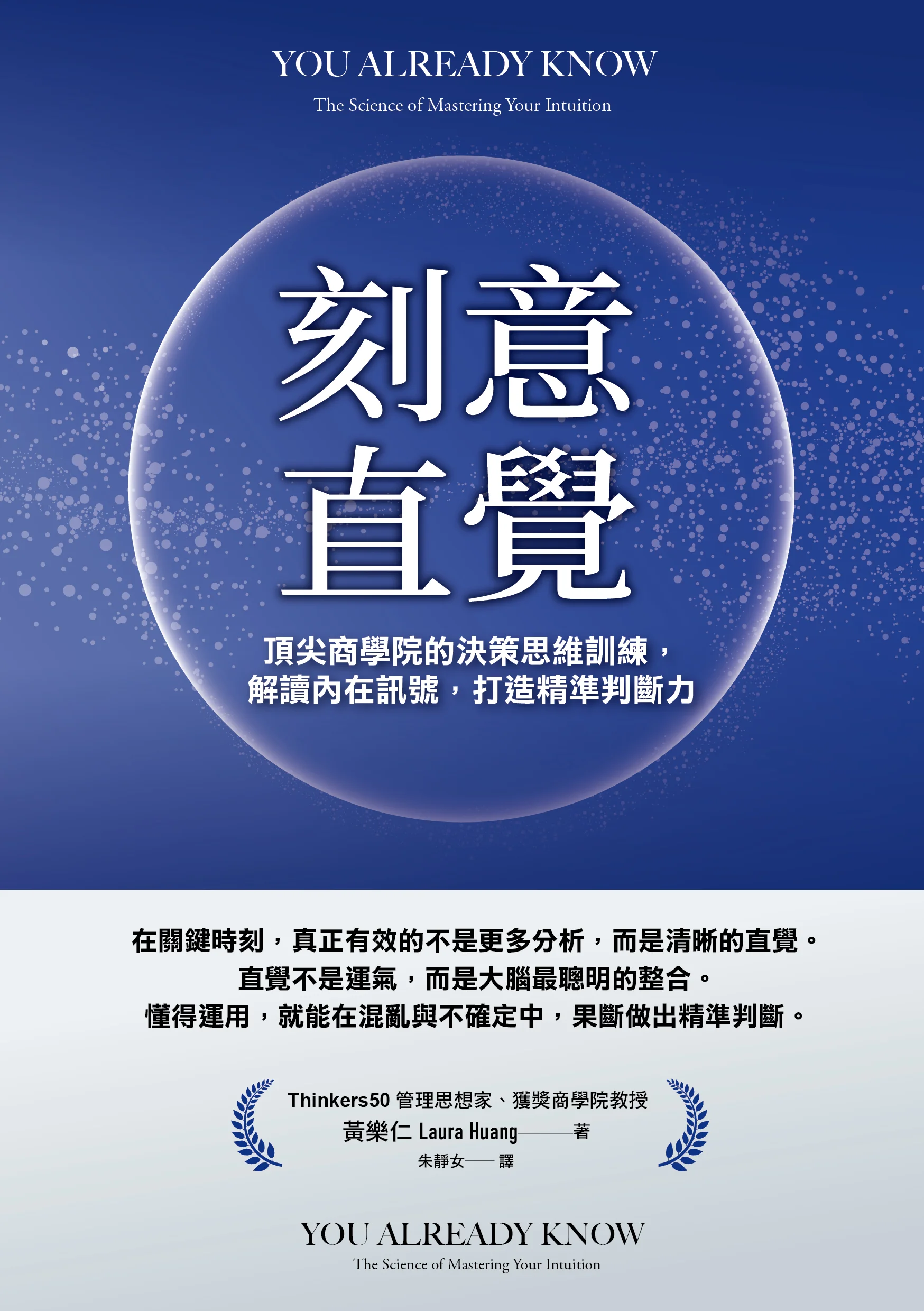
There are two main reasons why I recommend “Deliberate Intuition”:
First,it brings intuition from metaphysics to science. The author uses rigorous research methods to dismantle the formation mechanism of intuition, letting us know that this is not a mysterious ability, but a skill that can be understood, practiced, and used.
Second, it responds to the needs of this era. Today, when AI can handle more and more analytical tasks, we need to develop capabilities that AI cannot replace. Intuition is one of them.
As the book says:
Learn to use your intuition and you will be able to make better decisions, take quick action, and get closer to your goals.
Write at the end
Intuition is always there, but we often ignore it.
This book reminded me that those “inexplicable feelings” and “unspeakable intuitions” are not noise that should be suppressed, but signals that should be taken seriously. They are the voice of our inner wisdom, a gift from our brain.
Learn to listen, learn to trust, and learn to apply - this is the essence of “deliberate intuition”.
If you are also a very intuitive person, this book will help you understand yourself; if you feel that you have no intuition, this book will teach you how to cultivate it. Either way, I wholeheartedly recommend it.
Finally, if you are interested in decision-making thinking, personal growth or self-exploration, please continue to pay attention to my articles. If you have any questions, please leave a message or write to us for discussion.
Further reading
- See the situation, layout, and break the situation: “Breaking Through Mindset” teaches you how to no longer be influenced by the situation
- Focus is your most precious asset: “No one can steal your focus” reading experience
- Complete guide to personal branding in the AI era: from positioning, content to monetization, understand it at once
External resources
📖 深入探索相關主題