Where should project managers go in the AI era? Understand the five new basic skills of PM from Japan’s JSOL debate over the definition of “interests”

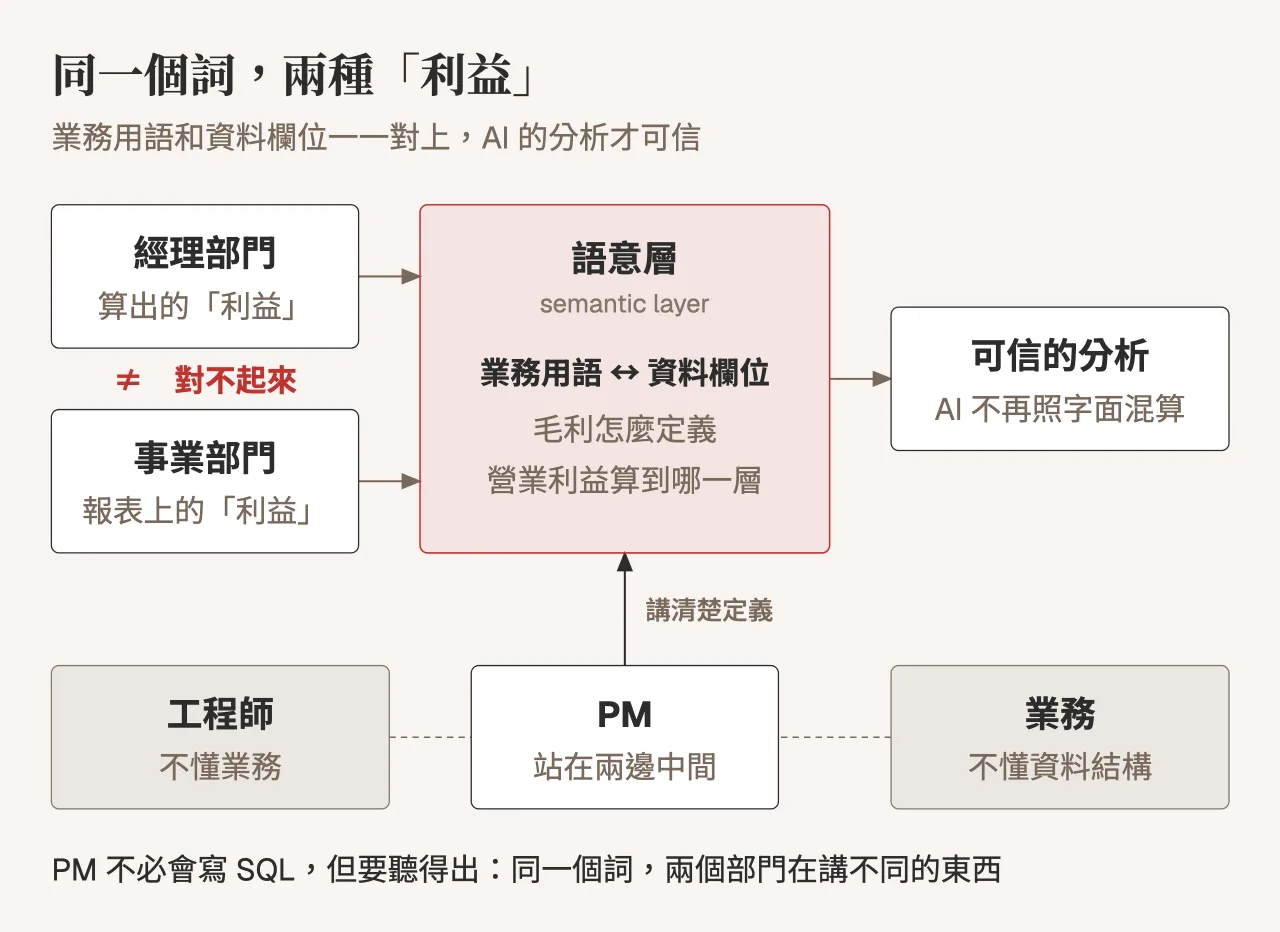
The same company, the same word “profit”, the numbers calculated by the management department, and the reports in the hands of the business departments are not the same. Both sides are correct, they just mean different things.
This is the bottleneck encountered by Susumu Tsubouchi, project manager of Japanese system integrator JSOL, in a cost management project of a large manufacturer. When people hold meetings with others, this ambiguity can be overcome by tacit understanding and experience; but once AI is asked to analyze data, AI has no tacit understanding at all. It will just mix numbers with different definitions literally and calculate them together.
I would like to start from this case and answer a question that many PMs are thinking about: When AI greatly improves the speed of doing things, do companies still need project managers?
I worked as a project manager, so I am particularly interested in this topic.
First see clearly which piece the AI took away
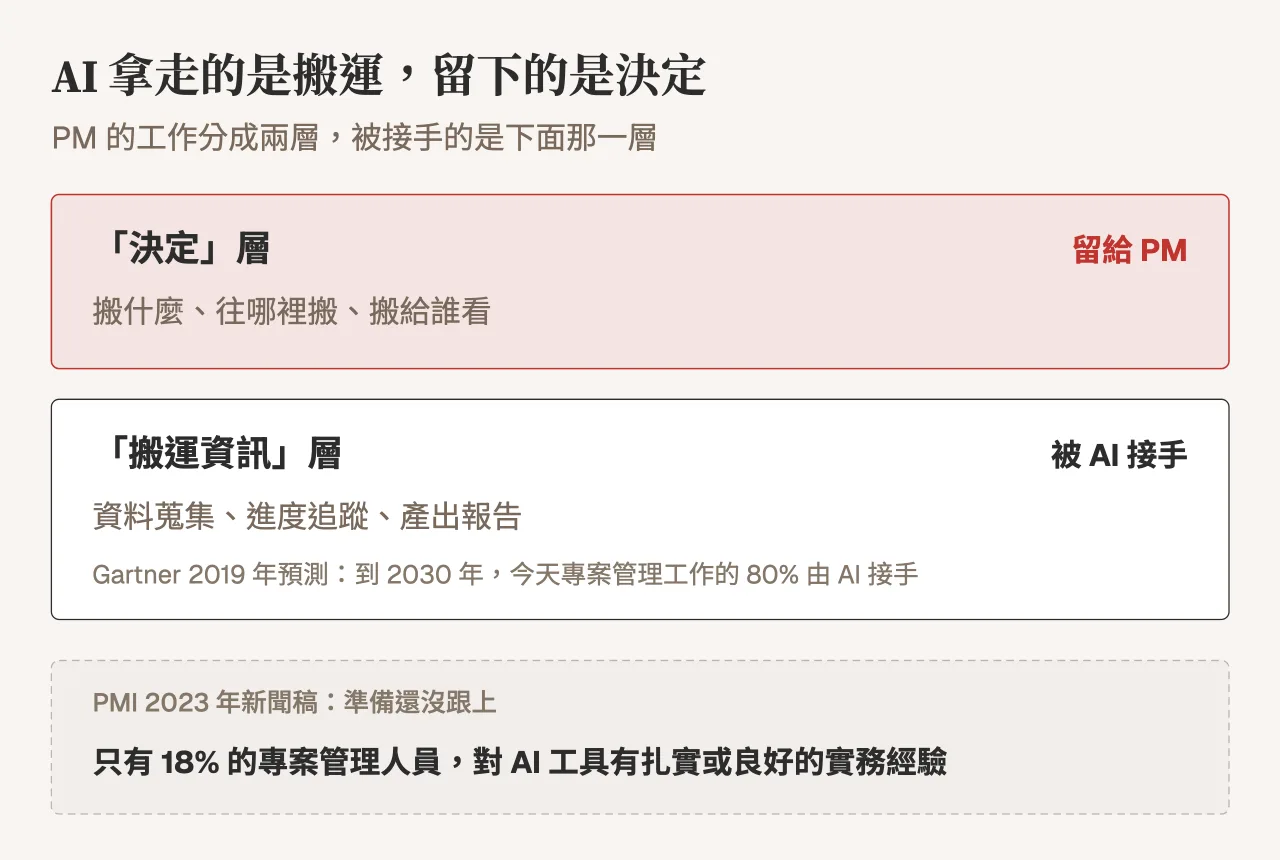
In March 2019, Gartner issued a press release that has since been cited countless times, predicting that by 2030, 80% of today’s project management work will be taken over by AI. Many people only remember the number 80% and forget what Gartner named: data collection, progress tracking, and output reporting. These take up a lot of PM’s time, and are most easily done by machines quickly and accurately.
In other words, what was taken away was the layer of “transporting information” in the PM’s work. All that’s left is to decide what to move, where to move it, and who to move it to.
In its 2023 Press Release (opens in a new tab), PMI (Project Management Institute) gave another figure: only 18% of project managers said they had solid or good practical experience with AI tools, and 49% had little experience or understanding of AI in the context of project management (PMI noted that this was undisclosed internal research). The work content is changing, and most people are not ready to keep up.
Putting these two figures together, the question becomes very specific: After the job of transporting information is handed over, what can the PM rely on to stay on the field?
Tsubouchi Shinshi’s answer: “Actually, it hasn’t changed much.”
In this Exclusive Interview (opens in a new tab) published by Ledge.ai in October 2026, the reporter asked Tsubouchi whether AI has changed the work of PMs? His answer was unexpected: “I don’t think the way I work as a PM is much different from before.”
Let me first explain the nature of the article: This is a recruitment interview for JSOL. There is a recruitment link at the end of the article, so when we read it, we must remember that it has recruitment purposes. However, the project process described in it is very specific and worth taking a look at.
What Tsubouchi (opens in a new tab) said “has not changed” refers to the core tasks of PM: understanding customers, identifying issues, formulating hypotheses, and moving the project forward. What has changed is the weight of these tasks. In the past, PMs spent a lot of effort coordinating schedules and tracking progress. Now those are handed over to tools, and the first few things directly determine the success or failure of the project.
From his project, I sorted out five basic skills that PMs should practice in the AI era.
Basic Skill 1: Translate business language into data language
Back to the wall of “interests”. Tsubouchi’s team found that in order for AI to make credible analysis, it must first match “business terms” and “actual data fields” one-to-one. The Japanese industry calls it “ビジネスセマンティクス”. The technical carrier is the semantic layer: which number represents what, how does the company define gross profit, and to what level operating profits are calculated.
Tsubouchi’s original words were: “For AI to perform advanced analysis, it must connect business terms and actual data.”
This matter existed before, but it was hidden in the heads of senior employees and everyone used a tacit understanding to get around it. Once AI enters the scene, all these tacit understandings must be written down. Who will write it? Engineers don’t understand the business, and the business doesn’t understand the data structure. The PM stands right in the middle.
Therefore, the PM does not need to be able to write SQL, but he must be able to hear “the same word, two departments are talking about different things”, and host a dialogue to clarify the definition.
Basic Skill 2: Come up with hypotheses first, and then ask customers to make mistakes
How to make the definition clear? Tsubouchi’s team also tried to directly ask customers to “define it” at first, but there was no answer. Managers and heads of business divisions all look at different businesses and require different numbers. It is difficult to reach a consensus on “which number is right”.
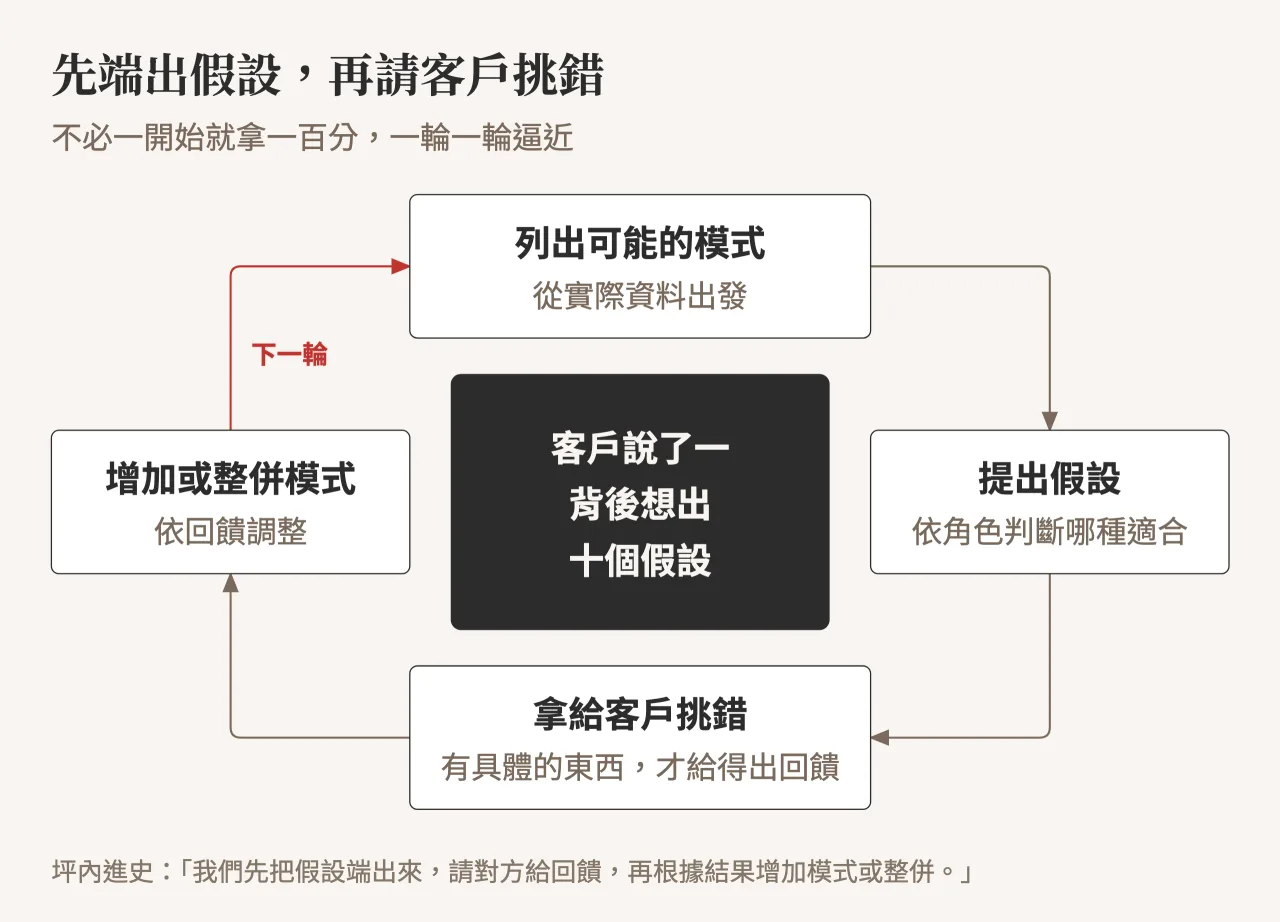
They changed their approach: they first listed several possible models from the actual data, and then based on the user’s role and business, they proposed a hypothesis about which model was more suitable and showed it to the customer. Tsubouchi said: “Of course it is impossible to get 100 points from the beginning. We first present the hypothesis and ask the other party for feedback, and then add models or consolidate based on the results.”
I think this is the section of the entire interview that is most worthy of being copied back by PM. Ask the customer to state his needs from scratch, and the other party often cannot explain them. If you give him a specific thing to fault, he will immediately know “this is wrong”, “this situation will become like this”, and “then I also want to see this”.
Tsubouchi used an easy-to-remember saying: once the customer says it, can you come up with ten hypotheses behind it. The value of PM lies in allowing customers to have something in hand to make their next judgment, rather than waiting for needs to emerge on their own.
Basic Skill 3: Decide which prototype to make first
If you want to test your hypothesis, you have to make something. In the past, prototypes were mostly static screen displays, lacking core logic and dynamic interactions, making it difficult to effectively verify the user experience: if you only look at a few screen diagrams, customers can only give opinions on the appearance, and there is no way to judge “Is this thing really useful in our business?”
For this project, Tsubouchi’s team used Databricks to create a prototype that directly connected to the customer’s real data in a short time. It also used its AI/BI Genie function to allow users to directly ask questions about the data using natural language. When customers see the results using their own numbers, issues that they were not aware of at first emerge.
When the cost of making things comes down, it seems like the pressure on PMs becomes less, but actually it’s the other way around. There is a sentence in the article that I agree with: the lower the cost of doing it, the more valuable the judgment of “what to do” and “which problem to solve first” is. You can try ten solutions, but you have to decide which three to try first and how detailed you should be in each one before you can get useful feedback. I also talked about this kind of sorting ability in “When the answer becomes worthless, judgment is your only compound interest asset”, and it is the daily life of PMs at the project site.
Basic Skill 4: See in advance how team divisions will change
This section has received relatively little attention. Before the project started, Tsubouchi tested the AI function of Databricks and determined that traditional data engineering work such as “collecting data and processing data” would be compressed. So when he formed the team, he deliberately did not deploy a group of data engineers as usual, but instead found analysts who could discuss indicators directly with customers, and asked them to also outsource the data processing.
After the project progressed, this configuration really worked. Tsubouchi’s judgment is: “Data engineering in a narrow sense, that is, the part that only does data processing, will have less and less value on its own.”
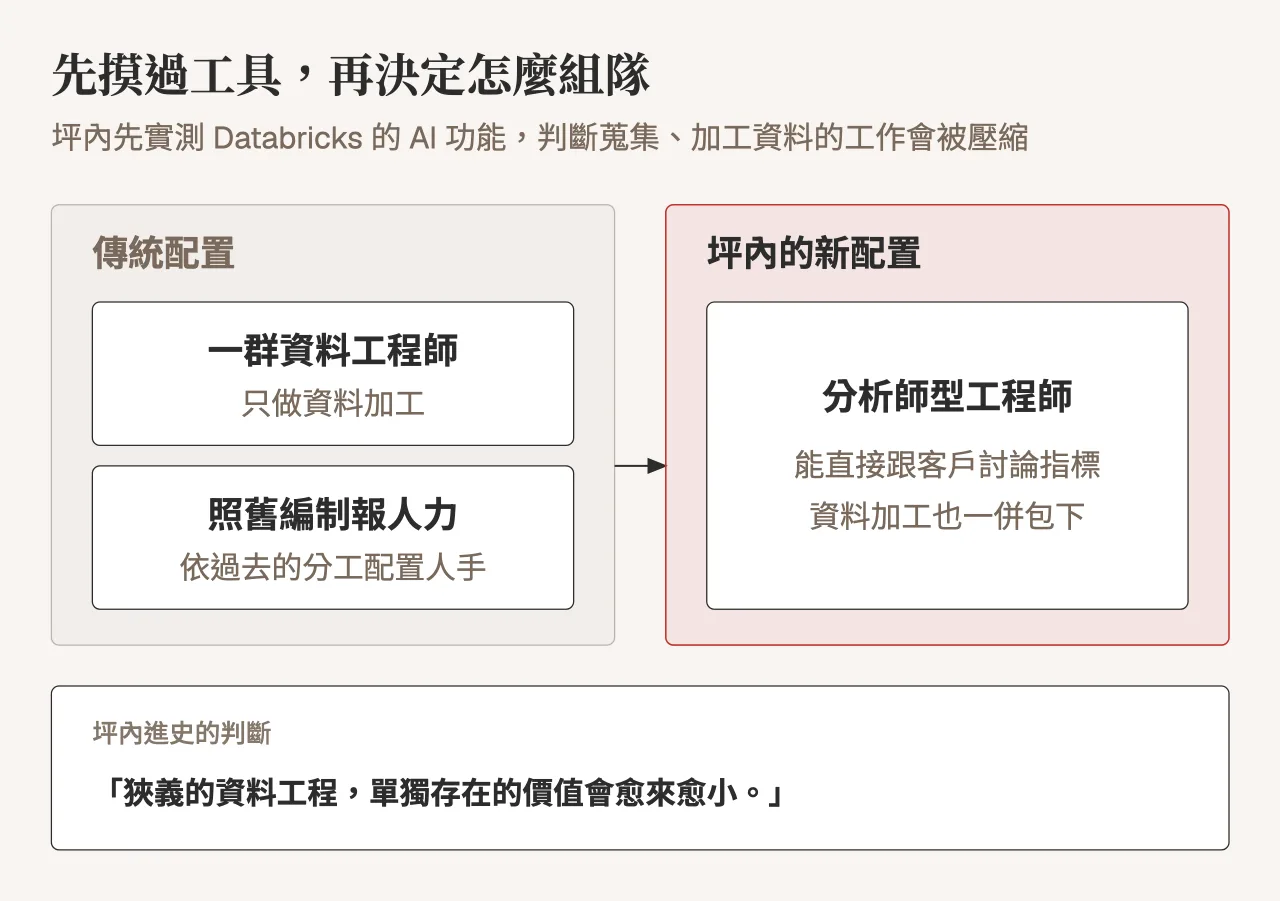
For PMs, this is a new job content: before others continue to prepare manpower reports, they must first touch the tools themselves, estimate which roles will be reduced and which roles will be expanded, and then form a team accordingly. This matter cannot be outsourced to AI, because it requires you to make judgments about your own projects and your own people.
Basic Skill 5: Take one more step from the current line to the side
In the last paragraph, Tsubouchi was asked what kind of person is suitable for this type of work. His answer was: “People who want to multiply their existing skills with another field.”
He pointed in two directions. Those with an engineering background can work on projects with colleagues who are familiar with SAP and the customer industry, extending their expertise to the business side; those who have done specific business in the enterprise and can imagine ten things behind it when hearing what customers say, can add AI, system development and project management to let their business knowledge be used in a different way.
AI lowers the threshold for implementation, so PMs can use the tools themselves to verify assumptions, and engineers can get deeper into the customer’s business. The walls between positions have become shorter, and people who originally focused on a single specialty are easily attacked from both sides.
Some people may ask: Doesn’t PM only have soft skills?
After reading this, some people may think that this article is talking about the cliché that “communication, empathy, and leadership are the most important.” However, I think exactly the opposite.
The reason why Tsubouchi’s approach can be established is that he has tested the AI function of Databricks himself first and knows what it can do; he dares to say to the customer, “Let’s make a prototype with real data first” because he knows that this can be done in two or three weeks. Without a practical feel for the tool, if you are too conservative, your team formation will remain the same, and your judgment will be inaccurate.
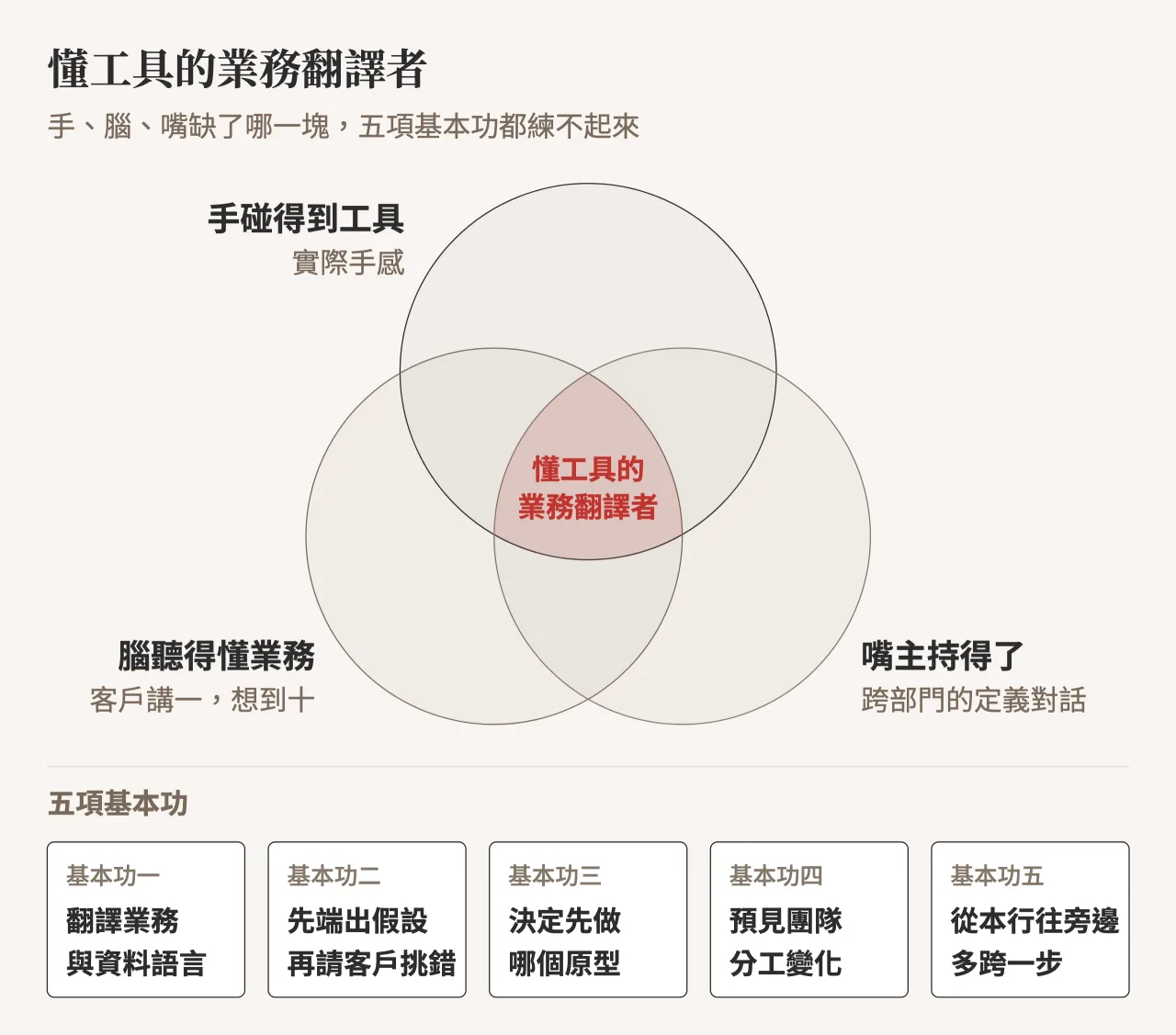
The 18% PMI figure points to this gap. PMs in the AI era must be business translators who understand tools: their hands must be able to touch the tools, their brains must understand the business, and their mouths must be able to host cross-department definition conversations. If any piece is missing, these five basic skills cannot be practiced.
Three things you can start doing this month
These three things do not require a budget, and there is no need to wait for the company to introduce AI. A PM can start by himself:
- Pick an indicator that is most frequently mentioned in the project you are working on (revenue, gross profit, active users are all acceptable), and ask people from two different departments how to calculate it. If the answer is different, you have found the first semantic level job.
- In the next demand interview, don’t ask “What do you need” empty-handed? Bring a rough version of the hypothesis first and ask the other party to correct their mistakes.
- Spend a weekend and use an AI data tool or program development tool to make a small thing that can run. The purpose is not to switch careers and become an engineer, but to let you know what the current tools can do the next time you estimate work or form a team.
Making things will get faster and faster, but the project will not move forward on its own. At the end of the interview, Tsubouchi said that there is no standard answer to business success. The job of a PM is to try things out with customers until looking back, they feel that “that choice was the best.” This sentence is equally true in the AI era.
References
- Ledge.aiえのない题目を、どう前に入めるか. PMにquest in the AI Era, October 27, 2026: https://ledge.ai/articles/jsol_career_interview_pm (opens in a new tab)
- Gartner, “Gartner Says 80 Percent of Today’s Project Management Tasks Will Be Eliminated by 2030 as Artificial Intelligence Takes Over”, 2019-03-20: https://www.gartner.com/en/newsroom/press-releases/2019-03-20-gartner-says-80-percent-of-today-s-project-management (opens in a new tab)
- PMI, “Demand Increases for Project Professionals with AI Skills, Yet PMI Research Finds Only 18% Have Practical Experience”, 2023: https://www.pmi.org/about/press-media/2023/demand-increases-for-project-professionals-with-ai-skills (opens in a new tab)
Next step
Bring this topic to your team
Vista Cheng speaks and runs workshops on AI workflows, writing and content systems for companies, schools and public agencies.