Make good use of AI Agent digital clones to upgrade from mid- to senior-level executives to Agent Commander-in-Chief

In the future, the success or failure of an enterprise will no longer depend on which department has the most complete staffing, but whose Agent is the most obedient, smartest, and most reliable?
Originally published in “Economic Daily (opens in a new tab)”
I know many middle- and high-level executives in companies. The test they face every day is not whether to use AI, but how to use AI to avoid being eliminated? The era of ChatGPT has passed, replaced by AI Agent capable of autonomous planning, cross-system execution, and multi-person collaboration. It is no longer a simple chatbot, but a digital clone with goal orientation, tool calling, memory and reflection capabilities.
When you embed AI Agent into enterprise workflow, a report that originally took ten people a week to complete may be produced by one person in a day; more than 80% of the review process that was originally stuck in cross-departmental processes can be automated. Mid-level and senior managers in modern enterprises may not need to understand programming, but they must know how to command these Agents to fight for you—in other words, they must make good use of AI Agents to create efficient, flexible, and controllable workflows, so that the team can upgrade from passive execution to active optimization.
Fundamental differences between traditional RPA and AI Agent
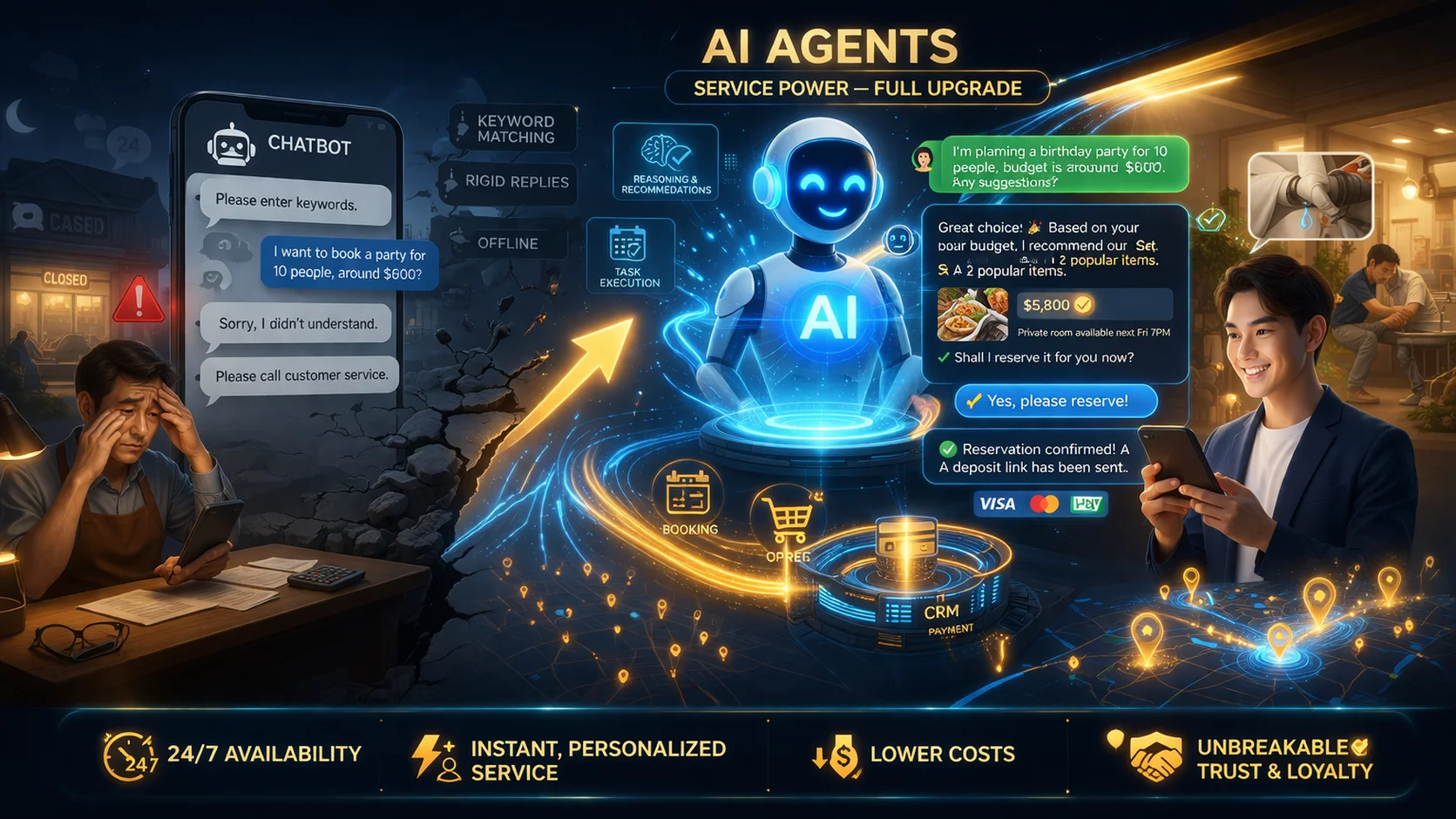
Many managers will initially confuse AI Agent with traditional RPA (Robotic Process Automation) (opens in a new tab), but the underlying logic of the two is completely different. Traditional automation can only repeat fixed actions and crash when encountering exceptions. On the other hand, AI Agent has three core capabilities:
-
Planning ability: After receiving high-level goals, automatically break them down into subtasks, prioritize them, and even predict risks.
-
Tool calling ability: It can connect dozens of systems such as CRM, ERP, Slack, Excel or PowerBI within the company to seamlessly access data, send emails, and update databases.
-
Reflection and learning ability: After completing the task, you will self-examine where you made mistakes, how to correct them next time, and continue to iterate.
Adding these three capabilities together, the AI Agent is no longer just a tool for a certain department, but more like a digital colleague who never tires. It can translate your commands into a series of executable actions, and it gets smarter the more you use it.
Monthly Report Agent: the easiest starting point to understand
For example, you can create a “Monthly Report Agent” with the goal of producing accurate department KPI analysis and recommendations at the end of each month. It will automatically capture sales data from the CRM, costs from the financial system, and manpower allocation from the HR system, then combine it with the latest market trend data to generate insights, and finally output it in your usual presentation format. The entire process requires almost no manual intervention.
The power of this type of Agent does not lie in who it replaces, but in that it directly eliminates the “information transfer” work that was originally scattered among five or six departments. What the supervisor gets is no longer a pile of raw data to be sorted out, but an analysis conclusion that can be used for direct decision-making.
The three major pain points of middle- and high-level executives, how can AI Agent crack them in one go?
Over the years, I have heard many middle- and senior-level executives complain about three things: information asymmetry, slow cross-department collaboration, and over-reliance on experience in decision-making. After importing AI Agent, these three old problems can be dealt with directly.
The first is the information island. Agent can access data from multiple systems at the same time and organize it into a single source of truth 24 hours a day, freeing supervisors from having to open ten tabs to switch windows.
Secondly, break through the human resource bottleneck. Tasks that are highly repetitive and have clear rules (such as contract review, expense reimbursement, and supplier evaluation) can be handed over to the Agent. The supervisor only needs to review the final output, leaving time for issues that really require judgment.
The third is large-scale decision-making. Agent can simulate multiple scenarios at the same time - for example, it allows you to quickly see “If you increase your marketing budget by 15%, what will your cash flow be like in three months?” In the past, it would have taken the finance department to work overtime for two weeks to give you the answer.
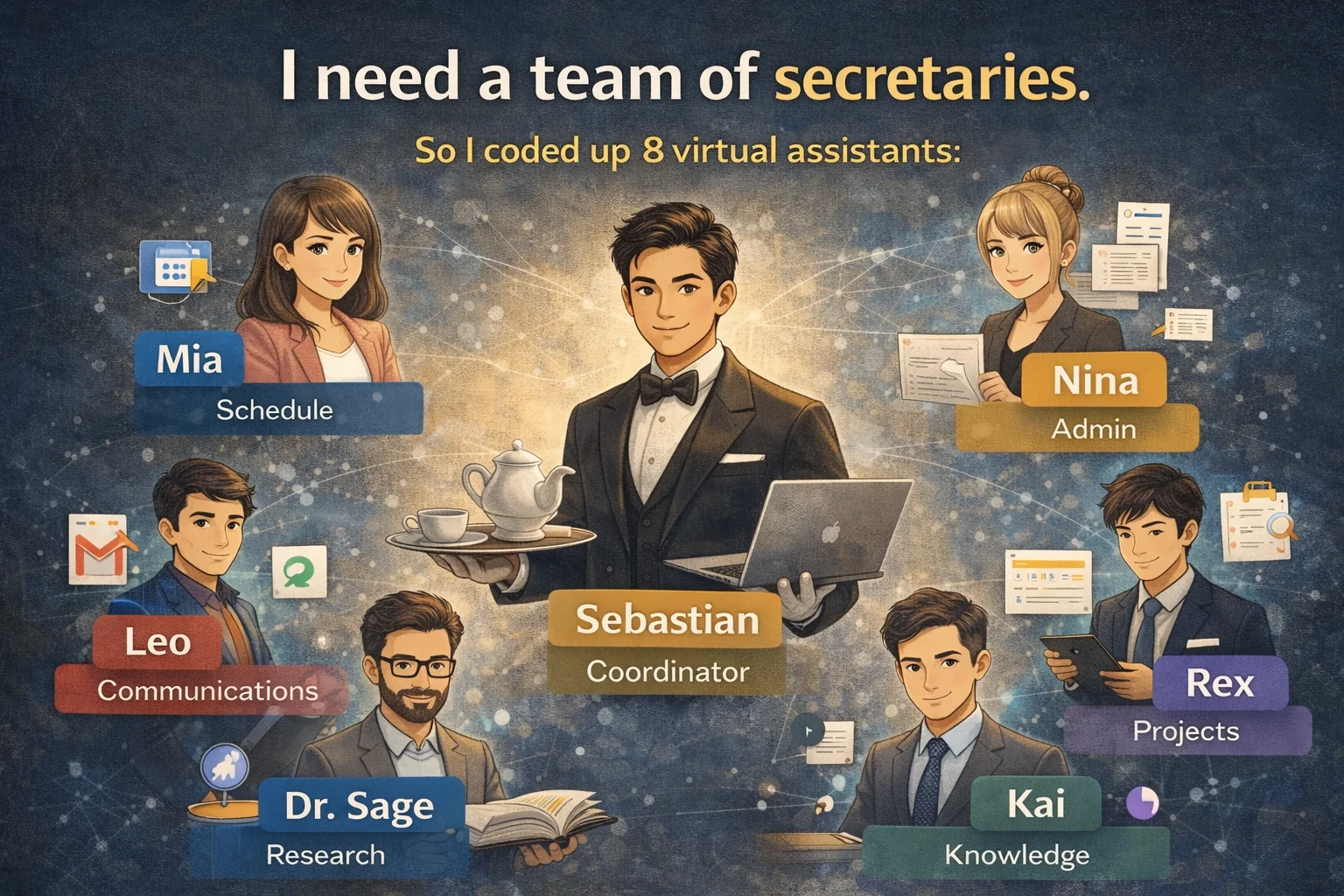
More importantly, the introduction of AI Agent can enable middle- and high-level managers to transform from firefighting captains to strategy builders. You no longer need to track progress and pay attention to details yourself, but focus on setting correct goals and boundaries. Regarding this matter, I have already broken down in detail how I apply this set of thinking to my personal workflow in another article “AI Secretary Team”.
From Manager to Agent Commander-in-Chief
Overall, AI Agent is not the next wave, but the infrastructure for this wave of competition. While your competitors are still chasing processes with Excel and email, you already have a digital team that stays up 24 hours a day, never gets tired, and keeps learning.
As a mid- to senior-level executive, your role is changing from “manager” to “agent commander-in-chief”; in other words, you don’t need to understand all the technical details, but you must know how to set goals, assign responsibilities and control risks. This is consistent with the new organizational operating logic mentioned in “AI Agent Revolution” - your value no longer comes from execution, but from command.
If you haven’t started practicing this yet, now is the best time. I previously wrote an article “Why now is the best time to learn Claude Code”, which is about this truth: the tools have matured, and the real gap will appear in who completes the reconstruction of their workflow first.
Two months to see the truth: starting with an MVP
Finally, there are recommendations for action. You don’t need to make the entire company AI at once, but you can find your company’s IT or digital transformation leader today to jointly take inventory of a high-pain point process and try to build a simple AI Agent MVP. After two months, you will suddenly find that the workflow is no longer just a stack of manpower, but a combination of collective wisdom.
Regarding how to choose the first scenario and how to implement it, I compiled a AI Agent Guide for Small and Medium Enterprises, which has a specific process inventory framework, which can be used as a draft for your first meeting with IT.
In the future, the success or failure of an enterprise will no longer depend on which department has the most complete staffing, but whose Agent is the most obedient, smartest or most reliable?
Now, it’s your turn to lead the AI Agent revolution.
Further reading:
- AI Secretary Team: A digital organization that one person can own
- AI Agent Revolution: Creating a marketing cycle that runs on its own
- AI Agent Guide for Small and Medium Enterprises: From Inventory Process to Go Online
- Why now is the best time to learn Claude Code?
External resources:
- Original text published in “Economic Daily” (opens in a new tab)
- Anthropic’s official description of AI Agent (opens in a new tab)
- Want to learn hands-on AI with me? See upcoming courses →
Next step
Bring this topic to your team
Vista Cheng speaks and runs workshops on AI workflows, writing and content systems for companies, schools and public agencies.