Hyper-personalized marketing: When AI can understand consumers in milliseconds, how can brands create a seamless service experience?
This article was originally published in “Economic Daily (opens in a new tab)”, and this is a reprinted version on the website.
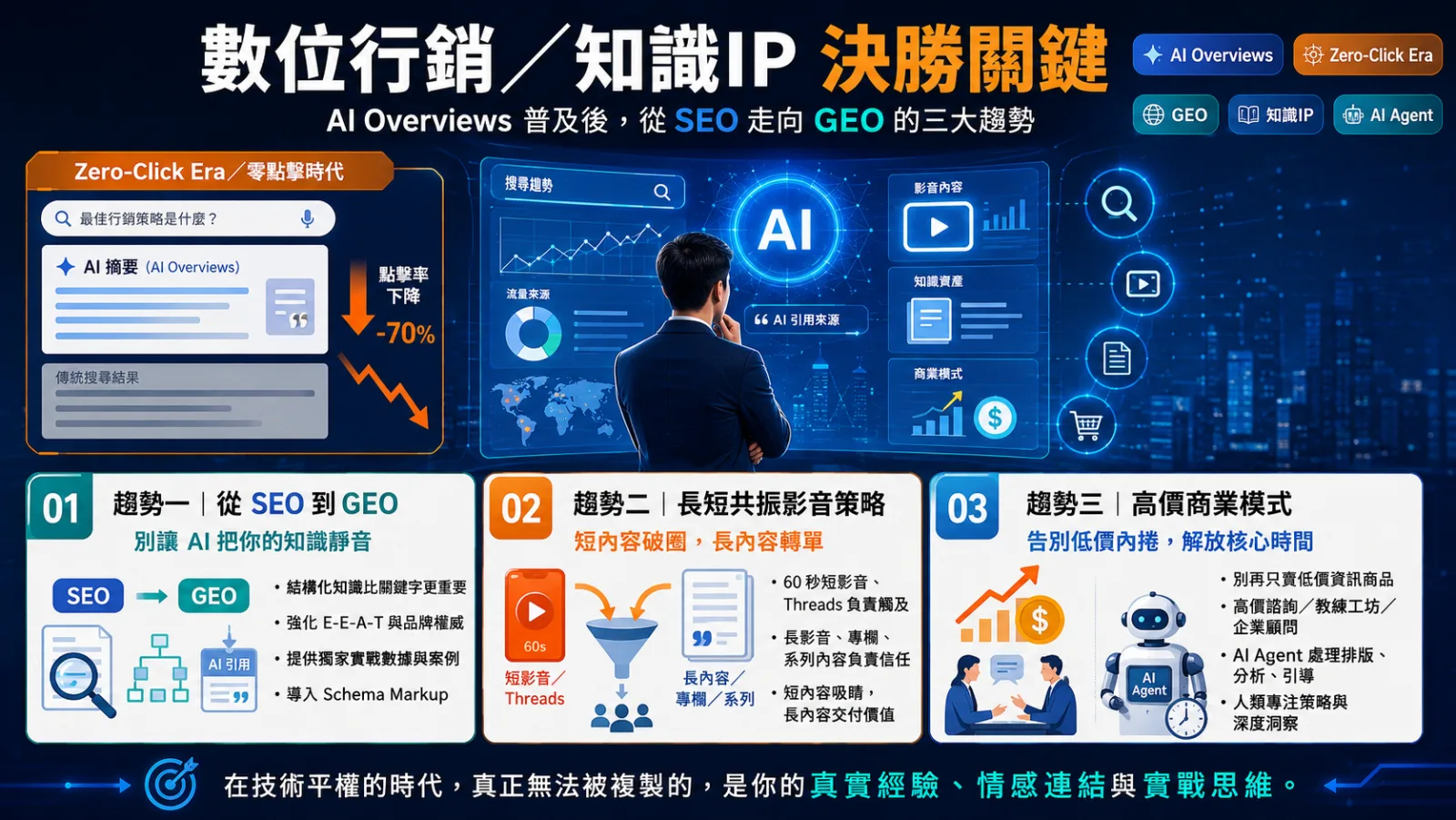
With the popularity of AI Agents, consumers’ search habits have changed to directly asking questions to AI and directly obtaining integrated standard answers. Traditional website click-through rates have plummeted, replaced by GEO and AEO.
From communicating with people to communicating with AI
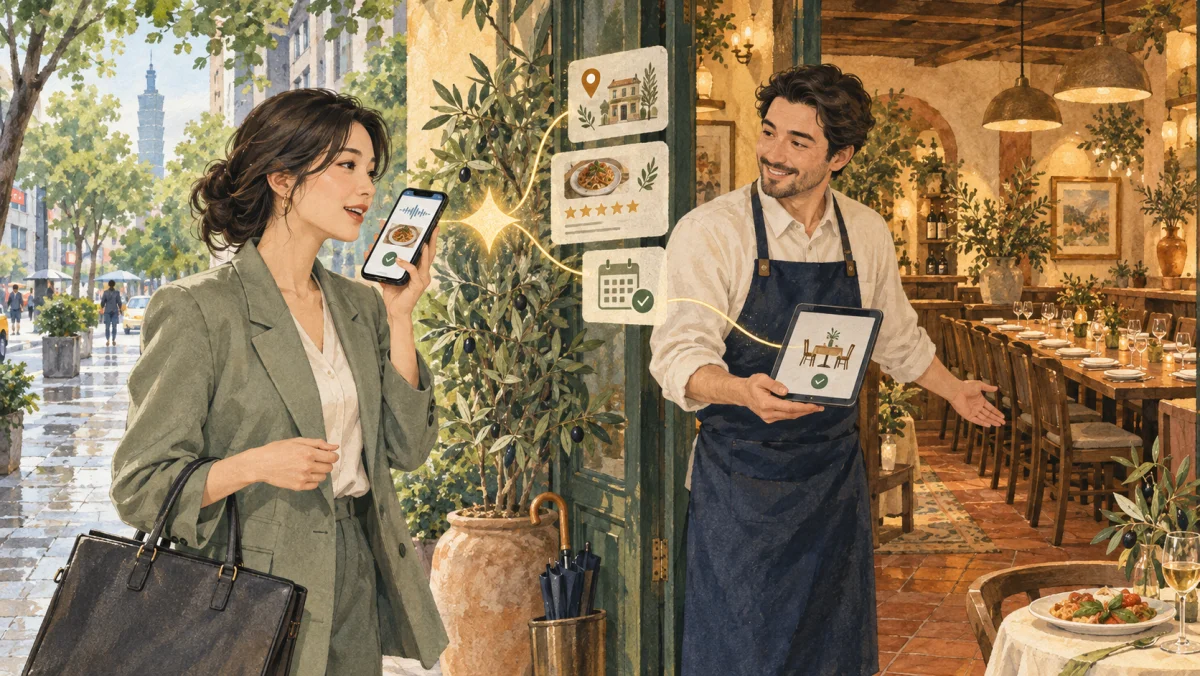
Today’s consumers are increasingly accustomed to letting AI assistants do their work. For example, they say to the voice assistant: “Find me an Italian restaurant in Songshan District, Taipei City, with a rating of 4.5 or more stars, suitable for a business dinner for ten people, and book a table directly for me.” At this time, the AI assistant will not read ten blog articles, but directly retrieve structured data, APIs and real reviews from the Internet in milliseconds, and make decisions. Therefore, the thinking of brand marketing must expand from human communication to AI communication.
In other words, relying solely on advertising or content farming will lead to expedited failure. Brands must return to their essence, accumulate real customer results, create an in-depth knowledge base, and increase the number of active searches for the brand in the community and market. Consumers’ real interaction signals will become the core key for AI to determine whether you are worthy of recommendation.
From historical data to current intentions
In addition to front-end competition for search traffic, there has also been a technological leap forward in back-end conversion and customer experience, which is zero-delay hyper-personalization (Hyper-personalization). Personalized marketing in the past was essentially post-processing of historical data. For example, when you buy a pair of jogging shoes on an e-commerce website, the system will send a letter the next day or next month, beginning with: “Dear customer, based on your purchase record, we recommend you to buy a sports bottle.” Although this approach is useful, there is a serious time lag and it is often a formality.
Hyper-personalization in 2027 is a precise calculation of intention and current scene orientation. It combines edge computing and predictive AI to instantly analyze the user’s mouse trajectory, screen dwell seconds, location, weather of the day, and even commuting status in the seconds when consumers interact with the brand. The purpose of AI is no longer to see what you bought in the past, but to predict what you plan to do in the next second, and completely customize the layout and content of web pages and apps within milliseconds.
Netflix, Spotify and Sephora are already doing it
McKinsey’s latest industry research points out that brands that take the lead in implementing hyper-personalized marketing have revenue growth rates that are 40% faster than their peers. The successful cases of major international manufacturers prove that this is not futuristic, but an ongoing reality. When a user scrolls through the Netflix homepage, the cover stills of the system-recommended movies are personalized and rendered instantly.
If you prefer romantic movies recently, the cover of the same movie will automatically show a warm scene of the protagonist falling in love; if you prefer thrillers, the cover will be replaced with a scary and suspenseful still in a few tenths of a second. This allows consumers to receive the strongest attraction signal in their brains the moment they slide over it.
Likewise, Spotify’s recommendation engine has moved beyond traditional playlist comparison to include real-time contextual data. The system can recognize that it is a rainy Monday morning and you are commuting on the MRT. AI will reorder the recommended content on your app homepage with zero delay to accurately hit your current emotional needs.
On the physical retail side, Sephora uses zero-party data voluntarily provided by consumers (such as online skin testing) and LINE Beacon detection in physical stores. When a customer steps into the physical store, the system will push a message to the mobile device of the on-site clerk with zero delay, reminding the clerk which foundation is in the customer’s shopping cart. The clerk can instantly provide a seamless service experience just like a VIP.
The essence of technological warfare is a battle to defend brand trust.
Digital marketing in 2027 is, on the surface, a technological war between AI technology and computing speed, but in essence it is a battle to defend brand trust. When technology can help brands see through consumers’ minds with zero delay, brands should use this ability more carefully to transform it into thoughtful, smooth and non-intrusive value delivery, rather than a sales pitch that makes people feel like they are being watched.
Do you want to implement your thinking on AI communication into your daily content work? Welcome to my “AI Content Production System Workshop”. Three-hour, small-class work, using Claude Code to establish a five-layer content production structure, allowing a piece of material to automatically produce six formats such as blogs, e-newsletters, and communities, leaving the power to places that really require your judgment and management trust.
Further reading:
- Service as Marketing: In the AI era, the best marketing is one that makes people feel that they are not marketing
- When the search changed its owner: three reminders from a GEO sharing
- AEO Getting Started Guide for Creators
Next step
Bring this topic to your team
Vista Cheng speaks and runs workshops on AI workflows, writing and content systems for companies, schools and public agencies.